
Ashokji's teaching to point oneself towards bliss as a direction that avoids spiritual dead ends: leaving the manas mind for the upper nervous system and buddhi mind. HRV resonance and OM Japa clear the way, Metta and the cute baby practice open the heart, and falling back calls for forgiveness rather than shame.
All videos
Every video on the channel, 2013 to today: 490 videos, 113 hours.
490 videos
2026

Getting past mistakes and regrets that keep returning: shame and guilt as a child's stopgap toward wisdom, OM Japa and meditation clearing what remains, and forgiving oneself as readily as others. Also Tad James's view of the past as a storehouse of wisdom, not a torture chamber, and a spiritual-eye story showing the divine does not judge.

The Enlightenment Pathway through the brain, and its two directions. Meditation moves from the left hippocampus past the fear of the right amygdala, eased by Navi Kriya, into right-hippocampus oneness that deepens into left-amygdala bliss; or devotional love in the left amygdala crosses over into right-hippocampus knowing. Lahiri Mahasaya's diaries show both roads.
How a Bhakti Yoga practice modeled on Brother Lawrence's practicing the presence, with constant heartfelt prayer to Divine Mother, broke through to the left amygdala and became a healthy addiction. Also covers Ashokji's advice to point Kriya Yoga toward bliss, how cultivated bliss completes Sat Chit Ananda, and the whole Kriya equation.

Why visions, intuitions and downloads in meditation often arrive small, brief or fuzzy through a gap in left-brain processing, and why discounting them is a mistake. Covers slowing the breath into HRV resonance to create that gap, telling self-generated imagery from a true download, and the marks of the Higher Self.
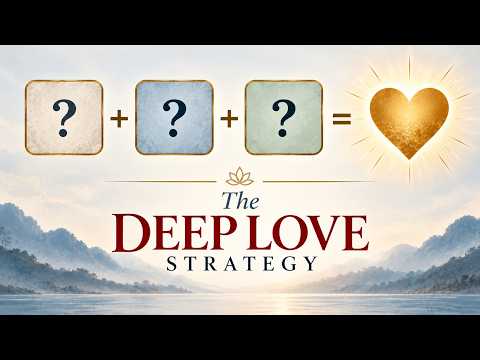
Eliciting a deep love strategy, a method from Tad James and NLP: recalling how one knew one was deeply loved — a hug, a look, a tone of voice — then asking a partner, child or parent the same questions. Repeating their sequence communicates love past the chatter, and one's own strategy can be asked for.
How daily repetition of meditation levels out the ego's ups and downs as experiences come and go. A thrown airplane and a sensei's lesson on practicing one principle exactly illustrate learning the release; stacked small wins build skill, trust, faith based on experience, and the ability to surrender.

Paravastha, the after-effect poise phase of Kriya, taught as "soak up what shows up" across three levels: the parasympathetic Four Proofs; feelings of the buddhi mind such as peace, joy and compassion; and the skills of Tranquil Breath, Freeze Response and Roll-Up of Consciousness. Soaking them in until habitual is "becoming the holy potato."

The difference between the "do" of kriya technique and the "be" of paravastha, the actual meditation state. Analogies of driving to a store and a paraglider show kriya as preparation for the three essentials. After that, the meditator lets go, glides on whatever shows up (Four Proofs, peace, love) and returns to the do when the glide dips.

Taoism's I Ching trigrams as a picture of chunking, from complex detail up through yin and yang to the one. Covers chunking up and down in conversation (an NLP idea), patterns in nature, fractals and story, and why the right brain's unified view has no words, shown through Lao Tzu and his fabled meeting with Confucius.

Why a meditative state or blessing often arrives after the session (on the couch, on a walk, at bedtime) rather than during it. The looking mentality and the left brain's critical factor block it until one truly lets go into the state of Be; the next session recalls that letting-go after HRV resonance and OM Japa.

Therese of Lisieux's Little Way as a remedy for overwhelm and perfectionism on the spiritual path: childlike trust and confidence in the higher self over spiritual achievement. Covers Story of a Soul and Maurice and Therese, the Little Way as the "be" of Kriya Yoga's do and be, and letting the left brain lean on the right.

Ho'oponopono, the Kahuna forgiveness practice as learned from Tad James: the simple four-phrase chant, the cause-and-effect equation at its core, and a deeper inner version that fills both people with divine light, unburdens the heart, listens, then cuts the aka cord. It also helps energy-sensitive yogis build healthy boundaries.

Why the transition from HRV resonance into the Tranquil Breath can be rocky, as the subconscious asks for big adjustment breaths. Letting go of control and allowing those breaths builds trust with the subconscious and settles the breath deeper. Also covers how resonance and sitting still bring the freeze response that pushes the breath into the belly.

Yoga's two core philosophies, pushing energy up the spine or pulling and allowing it, compared with a lineage warning against early mula bandha. OM Japa unhooks the chakras so consciousness snaps back to the brain, the origin of the name Roll-Up of Consciousness, read in the Gita's upside-down tree. Ends on blessings arriving like a thief in the night.

A passage from Maheshwari Dubeyji's Kriya Yoga book on the Roll-Up of Consciousness: watching prana and apana move, then rising with them toward the brain, which separates energy from consciousness. Covers manas versus buddhi mind, the broken lock that makes return always possible, and testing the state by recalling a worry.

Why a daily spiritual project, worked quietly through the day alongside meditation, gives life meaning and steadies its ups and downs. Examples from ashram life and practice: practicing the presence of Divine Mother through the left amygdala, Ashokji's urging to OM into whatever arises, gratitude, quote cards, the Cute Baby Meditation, Hakalau, Navi and the Gayatri mantra.

My New Book: Unlocking the Mahabharata Is Here!Announcement
The launch of Unlocking the Mahabharata, which reads the battle of Kurukshetra as the battle of the nervous system in meditation, the Ventral Vagal pulling outward against the Dorsal Vagal pulling inward. It previews Arjuna's core questions as initiation, the 18 days of battle as roughly 18 months of practice, ego dissolution into samadhi, and the return after it.

The four steps of Marshall Rosenberg's Nonviolent Communication (fact, feeling, need, request) are shown through a slammed-door example, along with how to draw the same steps out of someone else. It closes with an ashram story in which naming a fellow monk's feeling calmed a confrontation.

How the eyes move to access visual recall, visual construct, auditory, kinesthetic and self-talk, and how to find someone's visual recall direction with a memory question. Applies this to dyslexia by placing reading material in the visual recall position, and to noticing when an answer is constructed rather than remembered.

A five-step meditative progression framed by preliminaries: a prayer to the higher self, Mahamudra stretching and Navi Kriya. The steps are HRV resonance, sitting very still, noticing the four proofs, OM Japa in the six chakras (the crown lotus not counted), and resting to learn to enjoy, the being phase that becomes samadhi.

How to locate the six chakras by feeling rather than visualizing, using a body cue at each and sensing the energy trickle back to the spine, then mentally OM into each, up and back down. Explains how OM Japa breaks the brain's fearful projections held in the chakras, and Ashokji's advice to do it all day.
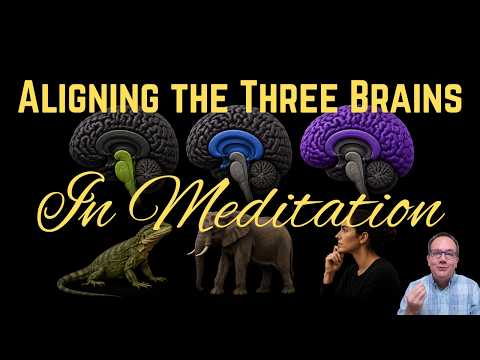
Soft versus hard focus in meditation, framed through the three brains theory: reptilian, mammalian and thinking. Success comes from aligning all three layers — parasympathetic peace, love and bliss in the left amygdala, spaciousness of the right hippocampus — rather than forcing concentration, which serves at most as a crutch.

The NLP Meta Model: sense data passes through filters that delete, distort and generalize it into an internal representation that drives state and behavior. Changing those filters, through NLP modeling or OM Japa in the chakras, changes behavior, and the model shows how the yogis' 'world is a dream' works and can be transcended.

A story of Ashokji urging OM Japa into negative emotions all day, then calling that the real Kriya. Since Kriya means action, whatever fills the day — anxiety and the news, or OM Japa, Cute Baby and Hakalau — becomes one's Kriya, and the golden thread of each day can be chosen.

Why a racing mind during HRV resonance practice is normal and why the left brain cannot control itself, so the breath and body are used instead. Covers preparation (no heavy meal or coffee beforehand), gently returning to the breath while taking small wins, open-eye options for hard days, and steady short daily practice over long sittings.

How to practice Hong-Sau in two phases: first mentally chant Hong on the inbreath and Sau on a longer outbreath to induce HRV resonance, then release control and watch for the Tranquil Breath. A listening variation treats the breath's own sound as Ajapa Japa. Inducing a state and then letting go is presented as a bedrock principle of meditation.

Why trance is a natural part of meditation: slowing the body and breath shifts brainwaves toward alpha, theta and delta and opens the subconscious. Covers a student whose Muse headband showed constant meditation, cleaning the subconscious with OM Japa, rebalancing after nodding off, an inventor's ball-and-plate trick, and testing Higher Self guidance.
Why fear naturally arises with new or deep experiences in meditation, and why that is part of the process. A first samadhi with no body or breath, Divine Mother's reassurance, Lahiri Mahasaya's comment on Arjuna's vision of visions, and the image of entering a freezing lake a little at a time illustrate natural progression.

Why daily consistency matters in meditation practice, told through a yogi's water-pump analogy and a plant that needs watering. Contrasts HRV resonance researchers who practice occasionally with daily yogis, whose comfortable breath rate slows over the years. Recommends a bare-minimum daily practice of five minutes and six kriyas to end the habit of starting and stopping.

Why the Freeze Response is not simply bad. Therapists working from Polyvagal Theory see a negative freeze in people who retreat from life after trauma. Yogis use the dorsal vagal freeze consciously and in balance during deep meditation, keep life cleaned out with OM Japa and Navi Kriya, and come back from it twice born.

How the Four Proofs of the parasympathetic system (hands hot and heavy, tingling lips, dorsal vagal pressure, tingling skin) give way to the Freeze Response. Its signs are ghost-like numbing, vanishing limbs, dislocation, cool waves, a frozen spine and a shell-like skin. As the freeze grows the proofs fade, and reaching it marks pratyahara.

Real progress in deep meditation, traced beneath lights, intuition and downloads: HRV resonance and sitting very still establish the parasympathetic system, leading to the freeze response, then clarity, then subtle absorptions such as spaciousness that grow and crystallize into samadhi as union. Spiritual experiences are treated as welcome signs along the way, not the measure.

Overcoming dullness, boredom and stupor in meditation by stacking short sessions: stop when enjoyment fades, get up, then repeat a brief sequence of stretching, Navi Kriya, HRV resonance, sitting very still, the Four Proofs, OM Japa in the chakras and enjoying. Pushing past enjoyment builds a habit of dullness; a qigong teacher's story shows small gains compounding.

A simple Yoga Nidra plan: after HRV resonance, sitting very still, the four proofs, OM Japa in the chakras and enjoying, lie on a yoga mat to hover in the alpha state between waking and sleep. Covers cleaning the subconscious, alpha, theta and delta as its three levels, and why experiences hit harder with more subconscious present.

Why one right-brain exercise can bring sudden joy after long practice: the three underlying processes (the Dorsal Vagal Complex, the left amygdala of bliss and right-brain expansion) snap together at once. Also explains why Cute Baby Meditation and OM Japa prepare the heart, and why meditators without them find peace but no joy.

Why Time Line Therapy works: the subconscious, a 'resolution warehouse,' holds unresolved emotions until it identifies with them. Covers Tad James's bus-stop discovery, the gestalt of linked events, asking the subconscious's permission, and why floating above and before the first event lets the subconscious drop a burden it no longer sees as itself.

Samadhi Feedback: Why This Practice WorksAnnouncement
Testimonials from viewers of the Samadhi Training, including one who fell into absorption mid-video and another's vision of a feast table, followed by reflections on the joy of seeing students open up. The practice's basis is summarized: start with the parasympathetic and peace, then OM Japa clears the way to deep brain access.

Samadhi Training 1 & 2 are here!Announcement
Launch of the Samadhi Training, parts 1 and 2. It explains the three-year delay, the Higher Self and Gayatri Mantra trainings that had to come first, and reads student feedback. Samadhi is presented as a lifetime unfoldment, and the training's small exercises as windows into the right brain.

Why noticing what actually shows up in one's own meditation matters more than measuring it against stories in books or other people's accounts. Two ashram downloads frame it, and a yogini who envied another's vision of a crown lotus turns out to feel the same opening kinesthetically. Closes on gratitude and leaving left-brain stories for the present.

Kriya Yoga and the meditative path reduced to three processes — the Dorsal Vagal Complex and Low-Idle-State, the left amygdala of bliss, and right-brain expansion — plus a fourth: reintegrating deep meditative states into daily life. Neo's rebirth in The Matrix and a home-first reading of "peace on earth" illustrate the reintegration.
A simple five-step daily meditation routine for the new year: HRV resonance breathing, sitting very still into a positive freeze response, noticing the four proofs, OM Japa in the chakras, and enjoying what arises. Opens with a New Year poem and covers a comfortable posture and doing a little each day until the practice clicks.
2025

A very long out breath as a holiday reset for grounding amid Christmas stress. A martial arts story of doing a whole roll set on one out breath shows how exhaling grounds the body, and the breath's pressure on the dorsal vagal is said to wake the parasympathetic system. Short practice rounds follow.


Lucid dreaming explained through brainwaves (alpha, theta, delta and a little beta), with a pre-sleep suggestion to program it. The warning is that lucid dreaming every night can crowd out dreamless sleep, which gives parasympathetic restoration and resets the conscious mind. Closes with a let-go practice for bedtime that hands worries to Divine Mother.

Kevala kumbhaka, or breathlessness, explained as a process rather than a thing: the spontaneous culmination of HRV resonance, the freeze response and three deepening levels of the tranquil breath. Rejects the idea that breath and heart stop, compares the state to hibernation, and warns that fixation on body and breath short-circuits the biofeedback process.

How to move from HRV Resonance into the Tranquil Breath: set up the parasympathetic with resonant breathing, then stop, let go and enjoy the Four Proofs until the Tranquil Breath arises by itself. Covers how freeze and tranquil breath deepen each other, and the breath's three stages: shallow and possibly rapid, moderate, super long.

A three-layer "yogi sandwich" of spiritual philosophy: Sankhya's split of prakriti and purusha with surrender as the base, the practice of yoga as the core, and Vedanta's non-dual oneness on top. Traces pratyahara opening into dharana, dhyana and samadhi, and urges returning to all three layers over and over.

The dream-like quality of waking life that can arise early on the path, read through Sri Yukteswar's passage in The Holy Science comparing dream and waking experience. Traces the progression from bound (pasu) to spiritual warrior, to disciple in a lineage, to skilled yogi, and why the inward path proves the easier life.

Where to rest attention in meditation: why the spiritual eye progresses back toward the medulla, the medulla as breath and heart center, and keeping the mind on whatever practice is underway. Afterward, attention follows the most enjoyable result — the Four Proofs, Tranquil Breath, Freeze Response — like a trail of breadcrumbs into bliss.

Balancing spiritual and material life through Lahiri Mahasaya's householder formula: work, family and daily meditation. Why leaning on any one part fails, why meditation must be built by skill rather than marathon sittings and pushing, and Yogananda's "spiritual alcoholic" advice of small practice sips through the day.

How reading fantasy can be a spiritual practice: getting lost in a story shifts identity into a character, revealing how Ahamkara, the I-maker, moves — the same shift deep meditation makes from left-brain to right-brain processes. Keeping the heart in wonder is framed as a form of the Cute Baby Meditation.

The three essential skills of Kriya Yoga: the Tranquil Breath, the Freeze Response and the Roll-Up of Consciousness. Covers the three levels of the Tranquil Breath up to the great kumbhaka, signs of the freeze such as numbness, dislocation and skin tingling, and consciousness rising from the lower chakras into the heart, with advice to befriend these states.

Yogananda's simple technique for contacting departed loved ones: feel the person in the spiritual eye, send a short loving message, then rest in the heart to receive a feeling. The video frames it with the teaching that the soul is eternal, and says that sending and listening awaken intuition.

Why short, repeated micro meditations build the skill for long, deep sessions: an hour broken into mini rounds of HRV resonance, sitting very still and the four proofs, with breaks. Also covers reaching the freeze response, losing time as meditation leaves left-brain memory behind, and five minutes of cute baby meditation at work.

How the Four Proofs of Meditation and the Freeze Response are inversely proportional. HRV resonance and sitting very still bring the proofs; repetition then soaks practice into the freeze, whose numbness, vanishing limbs, shell-like stillness and dislocation cut body sensation and so the proofs. Pratyahara is equated with the freeze, which brings relief, joy and clarity.
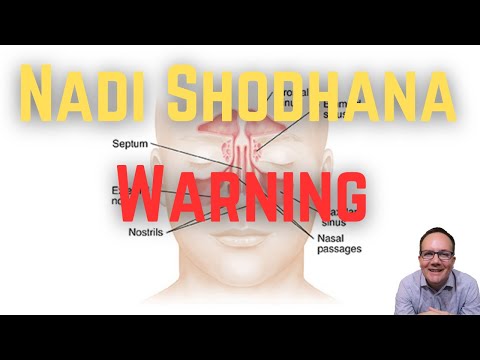
Why alternate nostril breathing (Nadi Shodhana) is not central to Kriya Yoga: its hand movements break sitting very still, while HRV resonance balances Ida and Pingala without movement. Covers the inner Khechari version touching the ethmoid sinuses, and Sri Nerode's warning against forceful, exact breath patterns that alter the heart rhythm.

A three-step progression for feeling bliss in the spine: a long outbreath compacts chest and diaphragm toward the Dorsal Vagal on top of the spine, and listening backwards turns that pressure into tingling, then subtle bliss. It opens with Ashokji's instruction to point toward bliss, the upper nervous system and the four Brahma Viharas.

How to balance the work of a meditation — HRV resonance, sitting very still, OM Japa in the chakras — with enjoying paravastha, the poised after-effect state. Every feeling rises, peaks and falls; once enjoyment passes its peak, let go rather than cling, and return to the practice in a do-and-be cycle.
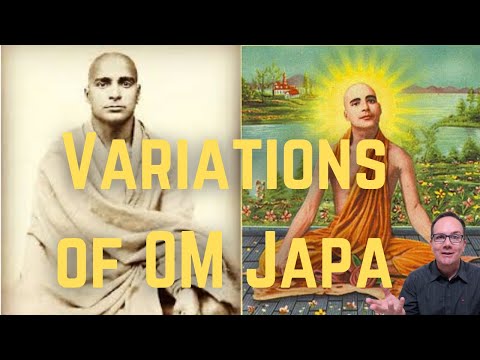
Variations of the OM sound for chanting into the chakras: OM versus AUM, Ong, the Tibetan Hum, the Christian Amen, and stretching the A, U or M to stress creation, preservation or dissolution. Includes a Swami Rama Tirtha story, a shower simulation of the inner OM sound, and why variety keeps practice alive.

Mahabandha, the classic triple lock of root, stomach and neck, demonstrated and explained as pushing energy toward the brain, against Kriya's approach of first cleaning the chakras with OM Japa. Gentler alternatives follow: comfortable breath holds and slow counterclockwise head rotation to subtly pull energy upward.

What "opening the third eye" really means: the awakening of intuition as meditation cleans out trauma, enters the Low-Idle-State and slows brainwaves to alpha, theta and delta. Covers how higher-self messages land as visions in theta, how the spiritual eye hollows out to hold a vision, and why downloads come in many forms.

How visions arise: a message from the higher self is reflected in the still pool of the subconscious, specifically theta brainwaves. Covers telling superconscious messages from conscious and subconscious ones by their uplifting taste, slowing the brain through HRV resonance and stillness, why non-dual Samadhi holds no visions, and integrating the subconscious through the hallway progression.

Live Training In San Diego - Aug 31stAnnouncement
Announcement of an all-day meditation training in San Diego on Sunday, August 31st, at the Gold Meditation and Wellness Center. The class covers the three pillars of meditation, five steps of easy deep meditation using HRV resonance, and a taste of the deep brain; attendees also receive two meditative trainings.

Spectacle versus heart in movies and spiritual teachings, drawn from Blake Snyder's Save the Cat. Contrasts The Watchmen with Ghost, and Tony Robbins' spectacle-heavy events with Tad James's technique-dense NLP and Time Line Therapy training, offering questions for judging what a teaching actually delivers.

Why pride goes before the fall: pride as a fear-driven ivory tower in the left brain, cut off from what is real until reality pops it. Covers self put-downs as the flip side, honest self-assessment of strengths and weaknesses, and humility as being grounded and present, with OM placement as an example.
Navi Kriya as a yogic remedy for anxiety, night terrors and fear, prompted by satsang testimonies. Demonstrates the technique — a loose neck lock, 100 mental OMs pressed into the third chakra at the navel, then 25 tapped into the spine — and explains how disrupting fear projected into the third chakra teaches that one is above it.

How OM Japa in the chakras works as a pattern interrupt on consciousness flowing out through the nervous system into attachment. The monkey-in-the-pot story, an NLP office-trigger example and a movie theater analogy show how interrupting the projection turns attention back toward the brain, and how repeated tastes of freedom teach detachment.

Two techniques for releasing stuck energy or pressure in the chest or lower throat: deliberately burping, and a rapid "machine gun" OM Japa stacked up through the stuck area. Sent back toward the spine, the rapid OM becomes blissful; OM Japa is offered as the answer to knots in the spine.

Approaching any problem through the 'tree of life', meaning the spine and chakras, by seeking an answer from each element in turn: earth (physical), water (subconscious), fire, wind and space. Examples include money anxiety met with investing, ringing in the ears versus nada, and calling on Kali and Shiva against a hostile supervisor.

Why chasing other people's miracle stories disempowers meditators and numbs them to subtle signs such as synchronicities, the Four Proofs and the Freeze Response. Covers being at cause versus at effect, the Big Baba Syndrome of hanging one's power on an outer guru, and why true yoga and the true guru are always interior.

Multiplicity: how several refined principles practiced together produce results larger than their sum. Four Aikido principles (wedge, roll, lead and ground) illustrate it first. The same idea then explains the layered steps of Kriya meditation and the Gayatri Mantra training, with congratulations to those reaching 44 days of practice.

Guilt over never doing enough, answered with Ramakrishna's parable of a forgetful farmer and an angel carrying a bowl of oil around the earth. Also covers Ramakrishna's collapse into bliss at a white crane and his visions of Kali, Jesus and Hanuman as chosen ideals, tied to left amygdala bliss.

Yogic accomplishments framed as levels of wealth: HRV resonance as the first million, then the tranquil breath, freeze response and roll-up of consciousness, up to bliss and expansion as ultra high net worth. Hanuman forgetting his powers and newly rich resort guests show why recognizing inner wealth lets it integrate and wash out the ego.
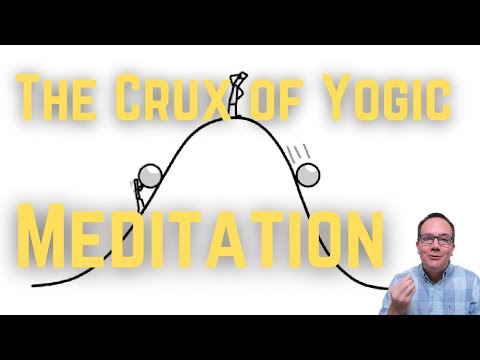
Why interiorization (pratyahara), reached through HRV resonance into the freeze response, is the crux of yogic meditation. Covers an ashram story of an unanswered question, the epics' war as a battle of the nervous system, how long consistency usually takes, and how OM Japa in the chakras clears the way for a roll-up of consciousness into the heart.

Returning to the basics as the real meditative path, after Brother Premamoy's "Never be afraid to start over": HRV resonance, sitting very still, the four proofs, the freeze response, tranquil breath, OM Japa in the chakras and the roll-up of consciousness. Experiences like the spiritual eye are gifts beside the path; treating them as success breeds anxiety.

How messages from the Higher Self pass through the subconscious and surface as images, and a process for learning one's own dream symbology: write down every detail before moving, ask what each element personally means, then string the meanings together. Examples come from recurring ashram dreams, a martial-arts dream, and visions during Gayatri Mantra practice.

Gayatri Mantra Training Is Here!Announcement
Launch of a downloadable Gayatri Mantra training built on a six-point progression that directs the mantra into a specific part of the deep brain. Also covers visions that matched Dubeyji's Gayatri poster, a reading from The Super Science of Gayatri, and a reading of the mantra's words as overcoming the lower three chakras.

Why Kriya Yoga and OM Japa in the chakras are feeling exercises, not visualization, and how feeling into the body exercises the caudate nucleus. Guided exercises move from one fingertip to the whole body, then breathe through it as one. Chakras are cleaned by putting the mind there and OMing into it, not by picturing them.

How artists who touch superconscious inspiration crash back into unresolved issues, and how Kriya Yoga's call to clean — OM Japa, Navi Kriya and the three insurance policies — guards against it. Ashokji's teaching on polarity explains why heavenly energy brought down from meditation can make an uncleaned issue blow up.

How deeper meditation sharpens sensitivity to others' subtle cues, which register as energy, and three psychic defense exercises for handling it: a clear glass wall, a balloon of spaciousness that pushes back, and becoming the spine as a sword. A heart mudra taken from Anandamayi Ma, thumb to ring finger, is added for busy places.

Dealing with discouragement as life and meditation swing up and down. Covers OM Japa into negative emotions as Kriya Therapy, resting on transcendent joy rather than dualistic happiness, life as a pig's tail that never stays straight, bargaining among the chakras' competing desires, and tasting the upper nervous system daily until one "becomes the ocean."

An overload version of Hakalau: holding peripheral vision together with every sound, smell, body feeling and taste at once until the left brain's labels drop away and attention shifts into the right brain's peace. A Scrooge story frames small tastes of that state as a cup of loving kindness to return to.

Higher self therapy, from Tad James's Huna teaching: clearing what one can on one's own side (Ha breath, OM Japa, HRV resonance, prayer), then reaching up so the higher self blesses from the other side. Contrasts left-brain perfectionism with flow, and ends with a story of Divine Mother blowing away a cloud on the heart.

How the enlightenment pathway runs through the brain, in answer to a meditator stuck in a void without bliss after the freeze response. Covers why the four proofs fade, why the void is to be soaked in, how charge crosses the right amygdala to the left amygdala's bliss, and the Cute Baby Meditation as a shortcut.

An exercise for transferring a sensation felt in the hand (breathing through it with the Ha breath, or breathing cool air onto it) into the chakras and back to the dorsal vagal along the spine. Also covers Ashokji's bliss program, heavier lower-spine versus lighter upper-spine bliss, and the progression from pressure to tingling to bliss.

Why taste the deep brain early, through Cute Baby Meditation, Hakalau and the Angel exercise, rather than build ideas about the state. A story of choosing an ishta, a Mother Mary picture for the Divine Mother, held as left-amygdala weight lifting; the Angel exercise's holy presence over the left shoulder; and how Kriya clears the way.

The NLP principle that the map is not the territory: the brain deletes, distorts and generalizes sensory input into a small internal map, the yogis' dream world. Applied to practice: holding a spiritual path flexibly, enjoying bliss instead of overriding it with more Kriya, and finding the true guru as intuition within.

Impermanence as the nature of the world, shown through Buddhist sand mandalas and a home lost to fire, and why the lesson must be relearned until it is grokked. The remedy offered is storing treasure in heaven, the upper nervous system, by soaking up transcendent qualities such as gratitude, joy and bliss in meditation.

Why energy released by meditation can rise through the body's front channel and feel stuck in the chest or heart, drawing on Ashokji's model of chakras with a front doorway and a back origin. Remedies include burping, a machine gun OM from gut to throat, and stretching or exercise; Navi Kriya then moves the release into the back channel.

Whether a yogi can enjoy life without being enmeshed in it. Covers Neti Neti and Sankhya's split of nature and soul, with Myers-Briggs and values as layers to disidentify from; an ashram story of rejecting life, a Kundalini headache crisis and learning to ground; and enjoying life while seeking ultimate fulfillment only within.
A hand-rubbing sensitivity drill, feeling an energetic bubble between the palms, carried over to feeling each chakra before and after OM Japa to build a biofeedback loop. Also covers the "holy grenade" image of OM Japa's broad reach, a one-year benchmark of daily practice, and the caudate nucleus as the brain region being trained.
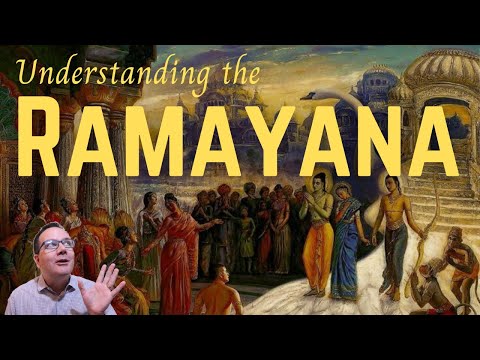
The Ramayana as a map of meditation: the lost kingdom as the stressed body, the battle as choosing the parasympathetic, Sita as Kundalini rising through earth, water and fire chakras to Rama in the heart. A personal story of worry illustrates the Roll-Up of Consciousness, closing on the Bhagavad Gita's tree and the Brahma Viharas.
How the flow state arises when practiced competence lets the subconscious join the conscious mind, drawing on Csíkszentmihályi and the 10,000-hours rule. Meditation follows the same pattern, opening to a deeper superconscious flow from the Higher Self; a walking or jogging witness exercise offers a taste of it.

The advice "make it your own," learned in Shidare Yanagi Ryu, applied to yogic meditation: practicing a lineage technique until its effects become personal, then following the still small voice of intuition. Covers telling intuition apart from ego and checking it against scripture and teacher in the Vedic mode of learning.

Where to rest the mind after technique: why overusing the spiritual eye brought headaches, and Ashokji's advice to rest in the medulla instead. Four tiers of good effects to notice and soak in follow — the Four Proofs, calm and bliss states, the freeze response with tranquil breath and roll-up, and losing the body's edge into expansion.
2024

The Gauntlet of Sleep: how slowing body and breath subdues the beta brainwave and meets the alpha, theta and delta waves of sleep, with conscious and subconscious mind as two temple guardians before the superconscious. Remedies include the movement built into Kriya, open-eye Hakalau, remembering why one meditates, extra sleep and Yoga Nidra.

Season's Greetings To All of You!Announcement
A short holiday greeting with Christmas wishes for viewers and their families. A brief aside notes that the Grinch's heart grows three times, read as coming up into the heart. Then comes the song "Have Yourself a Merry Little Christmas", followed by closing hugs and love.

The pitfall of following energy in meditation, as Ashokji warned: it tempts the meditator to manipulate others, and the ego turns that into disaster. Kriya Yogis point instead toward bliss, from the dorsal vagal up into the heart, where loving kindness grows into compassion, joy and equanimity.

Navi Kriya WalkthroughGuided practice
A follow-along walkthrough of Navi Kriya, a Kriya Yoga preliminary. Brief theory places fear in the third chakra as a projection of the right amygdala, the barrier to a roll-up of consciousness; then OM is chanted aloud, 100 into the front of the navel in a relaxed neck lock and 25 into its back.

Why muscles lengthen and signal falling in deep meditation, and how stretching before sitting sets up that letting go. Walks through the Mahamudra as Ashokji taught it: inhale, hold, stretch forward with a curved spine, three sets, with gentler chair and bed variations and its link to the Tranquil Breath.

How gratitude interrupts the threat-hunting prefrontal cortex, which keeps modern people living in imagined fears, and so protects the positive momentum that creates luck. Covers a daily five-minute gratitude list, meditative skills as spiritual treasures that cannot be taken away, and Tad James's airport story of a couple whose jealousy derails their resolve.

How the spiritual eye can appear early in meditation — partial halos, deepening darkness, indigo, a white star, gold — and how it progresses closer. Explains it as the left-to-right brain passage via the corpus callosum, why to hold it lightly and embrace it rather than pierce it, and Ashokji's medulla-to-crown pathway for realization.
How to hold a meditative goal tenaciously yet lightly: Yogananda's bulldog persistence and Lahiri Mahasaya's "Banat banat ban jai" set against letting go of all results. The riddle resolves through Do Be Do Be Do and through treating meditation as a date with the Higher Self, watching for small successes.
How to test the Roll-Up of Consciousness. It means noticing consciousness, not just energy, rise up the spine into the heart and beyond, then recalling a mild recurring worry to see whether it still pulls one down. A yogini's story shows the Brahma Viharas arising spontaneously, and the practices that clear the way are listed.

How ego and bias muddle psychic impressions and intuition, starting from Tad James's point about the user error in muscle testing. Describes the feel of the conscious, subconscious and superconscious minds, how the Low-Idle-State and OM Japa still the mind's pool to reflect the Higher Self, and why a friend or guru confirms intuitive answers.

How to build a daily meditation habit on five minutes of discipline a day instead of willpower and long forced sits, which can lead to a love-hate relationship with practice. Covers what to look for in those minutes (HRV resonance, the four proofs, the parasympathetic system) and the gold star calendar method for staying consistent.

Stepping back: a short technique for deep meditation that mentally withdraws from the ventral vagal front of the body into the dorsal vagal along the spine and the medulla, with a mental OM into what remains in front. Covers preparing with HRV resonance and the four proofs, locating the medulla, and opening into immaterial meditation.

Doing the Cute Baby Meditation as a stretch of the heart into the left amygdala's bliss: rotating several pictures that move one instantly, and holding the feeling only while it stays real, since pushing past one's limit makes it feel fake. The exercise also guides bhakti and is practiced patiently, for life.
Why ups and downs in meditation are a normal part of the process, illustrated by a student's sahaja samadhi and a viewer's brief roll-up into the heart. Covers counting smaller gains like the four proofs, the Do Be Do Be Do cycle, returning to basics when life blows up, and OM Japa to resolve arising issues.

A response to the claim that science debunked the left and right brain, recast as two ways of attending. Covers Betty Edwards' upside-down drawing method, Iain McGilchrist's poem and chicken examples, and a panoramic take-it-all-in exercise at the ocean or mountain, tied to Hakalau and deep meditation.

Four practices for times too hectic to sit and meditate: quick inbreaths with long outbreaths (AMOL), Hakalau peripheral vision, the Cute Baby Meditation, and OM Japa into a problem. The video opens with Brother Premamoy's advice to a troubled monk to walk and breathe long.

Why the divine arrives subtly, "like a thief in the night," and how noticing small signs such as the Four Proofs builds that awareness. An ashram story about false humility contrasts clamping down on emotions with cleaning them out through OM Japa; the thief entering through the roof becomes the higher self descending through the crown.
Why peace, not happiness, is the place to start: happiness is conditional and dualistic, while peace from HRV resonance and OM Japa in the chakras opens naturally into the four Brahma Viharas — loving kindness, compassion, joy and equanimity. Stories of Brother Anandamoy and Ashokji, who corrected happiness to bliss, illustrate the point.

An old story of a monkey trapped by its grip on cheese in a hunter's pot illustrates how attachment reaches out through the six chakras. OM Japa in the chakras releases those holds, bringing a Roll-Up of Consciousness; the sign of progress is that old triggers stop bothering. Closes with a poem from Omar Khayyam.
A reaction to a clip listing Patanjali's four obstacles to samadhi: a moving body, darting eyes, irregular breathing and a preoccupied mind. Each is matched to a practice (Sitting Very Still, Hakalau, HRV resonance into the Tranquil Breath), leading step by step to clarity and absorption.

Why a yogi may sense that people are hollow: practice opens the vast subconscious and superconscious seas while most people live in "the thin place," the conscious surface. Covers subconscious integration and brainwave levels, the Kahuna maxim of going down to go up, bliss at work, and patient "fishing" instead of advice.

How to begin reading the Bhagavad Gita, starting with Sir Edwin Arnold's poetic translation and then the three-volume Spiritual Gita from Lahiri Mahasaya's discourses. The Gita's war is read as the dorsal versus ventral vagal, won through the Freeze Response and Tranquil Breath, and the Pandavas' climb to heaven as the Roll-Up of Consciousness.

Why stimulating practices can send Kundalini energy up the front of the body through the ventral vagal, producing sexual sensations, and how Kriya's cleaning routes it up the dorsal vagal, where it feels holy. Covers the nervous system's three components, the roll-up of consciousness, the chakra's origin versus doorway, and the three insurance policies.

The parasympathetic nervous system as the first key to meditation: calming the body to quiet the mind from behind, the ventral and dorsal vagal split ("party in the front, business in the back"), and how HRV resonance brings the Four Proofs, the freeze response and interiorization. Closes with the three keys of yoga.
A Milton Erickson technique from NLP for easing a light headache: hunting for the pain's exact epicenter by narrowing left or right, front or back until the sensation slips away. The elusiveness of pain is linked to Kriya Yoga, where OM Japa cleans out attachment to the body and attention moves into the right brain.

The Enlightenment Pathway through the brain (left brain, corpus callosum, right hippocampus, right amygdala, anterior commissure, left amygdala), told through Ramana Maharshi's and the Buddha's plunge into fear. Answers whether yogis must face that fear: Navi Kriya shrinks the right amygdala, easing anxiety and turning fear in deep meditation into a small bump.

Why meditation points toward a silent non-dual state while daily life can use a dualistic practice: choosing an Ishta, reaching it through the angel exercise, and feeding prayers into it with the Ha breath. Also covers leaning on the higher self when overwhelmed, framed as the left brain designed to lean on the right.

The meaning of life as learning. A high-school story of seeing auras with Hakalau leads to two Richard Bach books, Jonathan Livingston Seagull and Illusions, whose core is that life's lessons expand consciousness. Time Line Therapy and daily OM Japa in the chakras are framed as turning the past into a storehouse of wisdom.

A short somatic exercise for tasting the bliss of the dorsal vagal complex: a small, long outbreath that shakes a wave of parasympathetic relaxation down onto the spine, like a rainstick. Includes a brief follow-along and advice to cycle it with HRV resonance, Sitting Very Still and OM Japa in the chakras.

The NLP principle of being at cause rather than at effect, learned from Tad James: owning everything in one's life, even what was absorbed subconsciously, takes back the power a victim gives away. Framed by the martial artist's resolve never to be helpless again and by 'if you meet the Buddha on the road, kill him.'

How the subconscious holds knowledge as pictures arranged on the screen of the mind, drawing on Milton Erickson, NLP and the right hippocampus. Two clearing exercises to try before meditation work on those pictures: cutting the Hawaiian aka cords and burning the auric field with a lighter. Ends with how psychic impressions arrive from another person's subconscious images.
Why affirmations a person does not fully believe can create conflicting parts in the neurology, a warning drawn from Tad James's NLP training. Offers an alternative: make the affirmation a curious question asked of life, as in a student's practice of diving into a single word such as love.

An account of an ungrounding crisis in the ashram: all-day focus on the spiritual eye, spinal breathing without OM Japa or Navi Kriya, and a Kundalini awakening that brought hours-long headaches and night terrors. The story leads into the three insurance policies, the balance of heaven and earth, and a grounding exercise of lying on the floor and surrendering.
Samyama explained as concentration, absorption and union becoming one. Concentration cannot be forced; clarity emerges from slow breathing and HRV resonance, absorption grows from unhooking from body and story, and union, or samadhi, blossoms out of absorption, each stage arising from the one before.

How a negative emotion becomes a chance to OM directly into it: feel the emotion, mentally OM into it with the breath, and watch it shrink until a learning appears. Also covers taking back energy tied up in subconscious junk, why the freeze response comes before mental clarity, and Tad James's "positive self future" learnings.

The Aikido principle of coming from behind (catch the tail of the hummingbird, not the nose) applied to meditation as a "sneak attack" on the mind. Instead of wrestling the talking mind directly, HRV resonance, sitting very still, the low-idle-state and freeze response, and OM Japa in the chakras quiet it indirectly, following Patanjali's order.
Weaning off guided HRV videos and the Resonant Breathing App by learning a comfortable breath rate, then practicing on feel with the three rules of the Holy Trinity of Breath. The Four Proofs, checked afterward, confirm resonance was reached; soaking them in trains the subconscious to drop into the state faster.
How committing to a bare minimum of five minutes a day builds a meditation habit that survives life's ups and downs — a golden thread through life. It also explains why HRV resonance works whatever one's mood, the technique being stronger than the mind, and how asking why one meditates brings clarity and a shift in identity.

Soaking in the calm of the parasympathetic state after the doing phase of meditation, pictured as becoming the holy potato. Covers enjoying the Four Proofs, a selenium–glutathione analogy for how soaked-in states recycle, Brother Dharmananda's advice to start from the last deep state, and Kriya Therapy for negative emotions.

How Kriya practice heads into the non-dual right brain while dualistic experiences of the divine blossom through the left amygdala, and how alternating the two integrates the deep brain. Covers a Hakalau taste of the right brain, choosing an ishta, the hallway progression and the angel exercise, and Lahiri Mahasaya's diaries in Purana Purusha.

Being reborn, or twice born (dwij), in deep meditation: how touching right-brain oneness, a roll-up into the heart, or a koan-style aha rewrites the left brain's code so ordinary life returns fresh. It also covers why this washing out becomes addicting and the simple path that leads there.
Why the Panchanon Bhattacharya Kriya lineage breathes up to the medulla but never through the brain: the crown is the thousand-petaled lotus, not a chakra. Above the medulla one may OM, then floats and lets go into expansion. Cautionary tales of kundalini trouble come with remedies: grounding, the three insurance policies, and talking to the subconscious.

Why effort and pushing stall at the spiritual eye, told through an ashram-era teaching dream of climbing ladders through stacked elevator rooms to a pipe too narrow to pass. The lesson is surrender: letting go of the doing left brain, then 'being' by soaking in the four proofs and three essentials like a holy potato.

A four-part beginner meditation formula: HRV resonant breathing, Sitting Very Still, the Four Proofs and OM Japa in the chakras. Each part is explained as biofeedback that quiets the body to quiet the mind. Mahamudra and Navi Kriya beforehand, and Cute Baby Meditation and Hakalau afterward, are offered as additions.
A digestive response can clear through the front channel (ventral vagal) during meditation and get stuck as pressure in the chest. The video shows how to release it by burping, yawning, singing, yelling or OMing just above the spot. It also explains how Navi Kriya clears this response and moves the energy to the dorsal vagal back channel.

Why OM Japa is essential to Kriya Yoga, answered through two viewer questions: whether Lahiri Mahasaya taught varied Kriya and Yogananda rightly simplified it, and a meditator whose chakra concentration without OM surfaced painful emotions. The remedy given is Navi Kriya, OM Japa in the chakras and Mahamudra, guided by core principles.

A story of hearing Divine Mother's "voiceless voice" while leaving the ashram, with a bolt of spiritual lightning into an injured hip, and how such messages arise: a charge in the left amygdala overflowing into the left hippocampus as language. Also covers the internal guru, Navi Kriya against fear, contemplating the divine, and the "OM King" whisper.

What the vibrational state in meditation is: the body-wide shaking also called the OM vibration and Kundalini shaking, explained as constant micro-vibration noticed once the Low-Idle-State slows the brainwaves. Covers its gift of loosened beliefs, the samadhi of OM, and calming it by befriending the subconscious, grounding and the three insurance policies.

A three-stage mula bandha progression (root squeeze, pull into the second chakra, stomach lock), extended with the neck lock into mahabandha, and a warning against daily practice before a year of OM Japa. Contrasts two yogic philosophies: forcing energy upward versus cleaning the chakras so consciousness falls back to the brain, like the Gita's upside-down tree.

Meditating with the Sri Yantra and its 3D form, the Sri Meru: the center for manifestation, the outer edge for merging with the divine. Moving focus outward level by level stretches awareness toward right-brain hugeness, then the blessing is brought back into life. 3D-printed Merus are shown and offered to students.

Why Kriya Yoga is not a visualization technique: a stacked process of long breathing for HRV resonance, sitting very still into the freeze response, and OM Japa in the chakras, felt as a biofeedback loop. This doing prepares the being phase, paravastha, soaking in as the holy potato, which is the actual meditation.

Why intense Kundalini energy rushes can deplete nutrients, with recommendations for vitamin B12, vitamin D, a multivitamin, colloidal trace minerals, selenium and liquid calcium. It closes on the opening of the heart knot, sensing others' energy through an integrated subconscious, and taking time to balance the new energy.

Celebrating the Life of KevinQ&A and stories
A celebration of the life of Kevin McCalden, a Navy veteran and early Kriya Yoga student who handed out Autobiography of a Yogi and kept a laminated Kriya Standard Operating Procedure. Touches on Testimony of Light and the afterlife, his heart opening as consciousness rolls up, and the Rosary as a dualistic practice.
2023
New Year meditation goals, framed through an Omar Khayyam quatrain read as interiorization, downloads and the roll-up of consciousness. A first level of mastery (HRV resonance, sitting very still, the four proofs, OM Japa) leads to a second, the three essentials, which arise unforced into absorption and samadhi; the book's progression is set beside Patanjali's Yoga Sutras.

How to introduce children to meditation, demonstrated with his daughter Runa: Navi Kriya to reduce fear, AMOL (always make the out breath longer) as an easy route into HRV resonance, and Hakalau, staring at one point while noticing fingers at the side. Short daily tastes, never forced, build the habit.

How negative self-talk programs the subconscious, which runs the body and forms the filter that deletes, distorts and generalizes experience. Teaches Tad James' "cancel, cancel, cancel" for undoing a spoken instruction, with OM Japa in the chakras, the Low-Idle-State, Cute Baby Meditation and Hakalau to clean the filter over time.

A five-step progression for feeling the third proof, pressure along the Dorsal Vagal Complex: a very long outbreath, noticing the squish of the chest, sensing extra compaction on the spine, finding a tickle inside that pressure, and letting it turn faintly blissful in the sushumna. HRV resonance and the four proofs set the groundwork.

The origin and doorway of each of the six chakras, a principle from Ashok Singh: OM Japa cleans back from the doorway at the front toward the origin by the spine, where bliss is found. Contrasts tantric practices that open the chakra's front, risking sensual surges, with Kriya's clean, interior roll-up along the spine.

Facing death as a source of clarity, drawing on Bronnie Ware's top regret of the dying: not living a life true to oneself. Covers clearing regrets inwardly through ho'oponopono and OM Japa, saying goodbye with gratitude, memento mori, the Egyptian weighing of the heart, and a car crash that left him resuscitated.
Why expecting or naming a meditative experience blocks it, prompted by a Joseph Campbell quote and Lahiri Mahasaya's advice to practice without thought of results. Hunting for results keeps the mind in the left brain. The Do Be Do Be Do formula solves this riddle by letting go into the Four Proofs, bliss and Hakalau.

Out-of-body experiences explained through the brain: the left temporal lobe projects physical life while the left parietal lobe maps an energetic body, two layers likened to the yogic koshas. Includes two exercises for separating the energetic body, and frames the experience as a partial freedom on the way to non-dual samadhi.

Two ways to increase chi, or available energy. The first is the Kahuna Ha breath in the morning sun, collecting mana with cupped hands while training HRV resonance; the second releases psychological baggage by listing worries and grievances and clearing them with Time Line Therapy or Huna exercises, so the subconscious stops spending energy on them.

Why the Kriya yogi first grows hot and then cool, as Lahiri Mahasaya said: relaxation dilates the arteries and brings heat, from warm hands to the whole body, until the dorsal vagal freeze response overtakes it with cool waves and tingling. Includes Ashok Singh's advice to pull back from excess heat, and menthol as a comparison.

30,000 Subscribers! Wow!Announcement
Reaching 30,000 subscribers becomes a lesson in celebrating meditation milestones: writing down successes after a session, without breaking the freeze response, and sharing them with trusted people. Includes Social Blade rankings, a nod to the newly released book as a manual for progress, and a Buddhist's remark that his practice and Kriya Yoga are the same.

Where to place the mind in paravastha, the after-effect poise state once technique stops, laid out as a progression: soaking up the Four Proofs, then the Tranquil Breath, Freeze Response and Roll-Up of Consciousness, then bliss and expansion through Hakalau and resting on the crown. Soaking up each state is presented as reinforcing it in the subconscious.

Three insurance policies built into the original Kriya Yoga to avoid meditative pitfalls. Mahamudra eases sitting still and keeps energy from getting stuck; Navi Kriya clears fear projected from the right amygdala into the third chakra; OM Japa in the chakras keeps the practice from turning tamasic and clears the way for the Roll-Up of Consciousness.

Small downloads: the tiny insights and connections that come once meditation sets up stillness, framed by the spiritual life as a sensitivity exercise. Two explanations follow, the higher self reflected in still waters and the left brain touching the right brain's multi-processing. The video ends on back-and-forth between the hemispheres and synchronicity as the natural state.

Why suffering exists if there is a God, framed as a riddle solved not by the left brain but by Raja Yoga work. Einstein's maxim that no problem is solved on its own level leads into NLP chunking down to specifics and up to the macro view, with Hafiz and Plato's cave pointing to meditation's expansion.

The three essentials of Kriya Yoga meditation (freeze response, tranquil breath and roll-up of consciousness) and how HRV resonance, sitting very still and OM Japa in the chakras induce them. The roll-up is framed as consciousness falling back to its roots, leading to clarity (Dharana), absorption into space and non-dual states.

How the subconscious filter shapes the world one perceives, illustrated by the holographic plate from The Holographic Universe and by neurotransmitters carrying every thought through the whole body. Using Rumsfeld's "unknown unknowns," OM Japa in the chakras is presented as a therapy that reaches problems one does not know one has, clearing an emotion until insight rolls up.

How the Reticular Activating System filters the flood of sensory information into five to nine chunks that form a holographic picture of reality, and why that makes life dream-like. Reframing, the core of NLP, changes the subconscious filter and with it the personality and the world; a car-spotting exercise tests it.

Why chasing happiness is a dualistic trap, told in three stages: learning that joy must come out of peace, Tad James's NLP view of happiness as simple, and Ashok Singh's rebuke that practice yields joy and bliss, not happiness. Meaning, love, joy, bliss and laughter are offered as transcendent alternatives that last.

Grace in meditation at two levels. The first is a call and response: controlling the breath into HRV resonance, then inducing deep states and letting go so the tranquil breath, freeze response and roll-up of consciousness can arrive. The second is continuous grace sensed behind life, glimpsed by noticing the subconscious take over walking, driving and reading.

The hourglass technique for seeing the spiritual eye, learned from Brother Bimalananda at Mount Washington, retold as Hakalau practiced while opening and closing the eyes in meditation. Also covers Todd Murphy's split of vision from intention, the riddle "look, but don't look," Plato's cave, and the many forms the spiritual eye can take.

Two levels of gratitude for meditation and life. The first is a closing prayer of thanks that works as positive reinforcement, telling the subconscious what worked so results come faster. The second is a right-brain gratitude of "radical amazement," practiced through Hakalau's peripheral vision, which can grow toward samadhi.

Explains one illustration from Mastering Meditation, shown in the new hardcover. The left brain filters raw sensory data into a holographic movie of life, lived from inside the character, while the right brain watches over the whole board at once as Higher Self or guardian angel. Also covers McGilchrist's bird example and meditation as tapping the larger right brain.

Mastering Meditation In 8 Steps BOOK is Here!Announcement
Launch of the book Mastering Meditation: Eight Steps From Beginner to Adept, which pairs ancient practice with modern medical terms. Outlines level one's four steps (resonant breathing, sitting very still, the four proofs, letting go) and the theme that all meditation rests on three processes: the dorsal vagal complex, left amygdala and right hippocampus.

Simple ways for parents to introduce children to meditation without pressure: modelling daily practice, AMOL breathing and the Ha breath, Hakalau with a dot on the wall, Sitting Very Still, the cute kitten meditation and OM Japa into bad feelings, using small rewards and reverse psychology. Closes with a friend's family practice resurfacing as a kundalini awakening.

Why bliss rising in meditation can push out old stored pain at the same time, called the "agony of bliss." The video covers prayer when compassion overwhelms, meditation as a sensitivity drill, the heart as a window into the left amygdala, and Saint Teresa of Avila's transverberation read as cleansing through bliss.

How returning again and again to the low-idle-state and cleaning the subconscious with OM Japa and Time Line Therapy builds a bedrock of emotional stability. Accounts from students, Brother Premamoy's shrinking ups and downs, and Lahiri Mahasaya's ball-on-stone answer at his daughter's death show reactions growing smaller as reliance on the right brain grows.

A program for Kundalini awakenings that become overwhelming, prompted by a viewer's letter: grounding, flowing instead of pushing, Mahamudra stretching, Navi Kriya, free-flowing OM Japa in the chakras and resonant breathing when possible. Kundalini is described as intelligence and power, not energy, that falls back to the brain once the way is cleaned, with Maharishikaa's surrender-based advice alongside.

Why enjoying meditation signals the right direction, told through a student's bliss arising while washing dishes. Resonant breathing leads to the Four Proofs; then the practitioner sits with and soaks up the deep states — the paravastha — reprogramming the subconscious so bliss, expansion and resonance return on their own in daily life.

Why Kriya or Kundalini practice without OM Japa in the chakras leads to negative results, as Lahiri Mahasaya wrote. Covers chakras as projections from the brain, the messy-house analogy for stirred-up karma, the error of forcing into the sushumna, and OMing into negative emotions through the day.

Why devotion to a single guru is a Western religious idea rather than a yogic one, shown through Yogananda's five gurus. The story of leaving the organization representing Yogananda, seeking the original Kriya, and meeting Ashok Singh, who taught that the true guru is met inside through the roll-up of consciousness into the medulla.

Why Kriya Yoga counts breaths on a mala or the finger pads: counting keeps some beta brainwave active, balancing the descent into the subconscious so the meditator does not fall asleep. Also covers counting mentally to protect the freeze response, and shows rudraksha and jade malas made by students in Australia.
Energetic sensations that arise in meditation and why to stay relaxed about them: a grounding release in the spine, stuck energy at injuries, Lahiri Mahasaya's three knots, the roll-up of consciousness, absorption, and freeze-response tingling, heat then coolness, and vanishing limbs. Uncomfortable sensations call for Mahamudra, Navi, grounding, and asking the higher self to ease off.

A plan for a self-guided weekend meditation retreat at home: short, enjoyable sessions of Mahamudra, Navi Kriya, resonant breathing, OM Japa in the chakras and letting go into the paravastha, repeated through the day. Breaks bring cute baby meditation, Hakalau, grounding, expansion and inspirational reading, keeping the heart engaged rather than forcing long sits.
How to find the chakras by feeling inside the body rather than pointing, looking at pictures or visualizing, a skill tied to the caudate nucleus and a biofeedback loop. Gives Ashokji's physical cues for each of the six chakras, from coccyx to medulla, then the routine of finding, feeling and OMing into each.

The Kriya Yoga bliss progression: the Low-Idle-State through resonant breathing and sitting very still, the Four Proofs as small beads of bliss, then OMing to the core of every chakra. It also covers chakras as brain projections cleaned by Kriya's insurance policies, and why deep union can lack bliss until the Enlightenment Pathway is cleaned.
Grief as a slow process the subconscious works through on the back burner. Covers Kriya Therapy, mentally OMing into where a feeling sits to soften its edge, and the transition states modeled on Elisabeth Kübler-Ross's grief cycle, from shock and denial through depression to acceptance, with a closing word for those grieving a loved one.

How the hypnagogic, trance-like state of slower subconscious brainwaves opens the way to the higher self in meditation. Covers beta, subconscious and gamma brainwaves on the Mind Mirror, Anna Wise's awakened mind, why fuzziness in meditation is acceptable, and a healer story showing a patient who rejected it.

How the enjoyment that blossoms in Paravastha carries into daily life. Babaji's hot-buttered-bread quote from Autobiography of a Yogi frames the divine as reaching into mundane pleasures; sunsets, music and poetry draw the mind into the right brain, following Iain McGilchrist, until Kriya becomes a practice of the whole day.
Letting intuition shape practice, from left-brain grasping to right-brain inviting. Covers locating the third chakra behind the navel for Navi Kriya by acupuncture's maxim "the point is the point," OMing into a felt solar plexus point, telling higher-self guidance from subconscious fear, and the Hero's Journey as a story between fear and love.

Why life is lived in the map, not the territory: the brain deletes, distorts and generalizes sense input, then hallucinates a coherent world through the temporal lobe. NLP's malleable mind and Yukteswar's dream passage in the Holy Science support the point, and OM Japa in the chakras and HRV resonance are offered to rewrite life's script.

A face-relaxation technique for deepening meditation once the table is set: sensing residual ventral vagal energy in the face and stepping it back, one step at a time, into the medulla. It rests on Ashok Singh's principle that every chakra has an origin near the spine and a doorway at the front.

Meditation framed as setting the table for a guest: the breath and body work of resonance breathing, sitting very still and the four proofs prepares the way, and then the meditator lets go so the higher self can arrive. A scene from the movie Hitch illustrates going 90% and waiting for the last 10%.
Hakalau, the peripheral-vision practice, set beside Rinzai Zen instructions for spreading out the vision and releasing fixation, read from Meido Moore Roshi's book. Covers how widening the gaze drives the right brain and stops mind chatter, extending it to all senses at once, and stories of perception's gears slipping, including divine hearing.

Why deep silence in meditation can bring a fearful 'guardian' presence, explained as touching the right amygdala, with a quick method for inducing out-of-body experiences. A walkthrough of Navi Kriya (neck lock, 100 mental OMs into the front of the third chakra, 25 into the back) as a preliminary technique for shrinking fear.

Why slowing into alpha, theta and delta brainwaves brings fuzzy, sleepy thoughts in meditation, and how to pass this 'gauntlet' by balancing the conscious and subconscious mind: focus gently and relax. Only that balance, like still waters, reflects the higher self; when practice feels stuck, meditating while dead tired brings the slower brainwaves.

Two pieces of advice from ashram monk Brother Dharmananda: his compassionate answer to a novice asking how to stop sex, and his instruction to remember the last best meditation and start there. The second becomes a technique — Mahamudra, resonant breathing and OM Japa, then inducing remembered deep states in paravastha, a call and response.
Whether deep meditative experience is only a manipulation of the brain and nervous system, or contact with the divine. Compares the yogi's disillusionment to science's clash with religion, asks who set up natural law, and presents the left amygdala and right hippocampus as an antenna to the higher self, with awe as its testament.

Lahiri Mahasaya's three knots as a downward progression in meditation: the tongue knot's magnetic pull at the spiritual eye, eased by drawing it back to the medulla; the heart knot, the inner body opening to feeling; and a spiral at the base of the spine. The upward Roll-Up of Consciousness through OM Japa into expansion runs alongside it.

Why heart rate variability resonance is the first step into deep meditation. Long-time meditators naturally halve their breath rate, and three rules (under seven breaths per minute, a slightly longer outbreath, no pauses) bring on that resonance on purpose. Also covers the Low-Idle-State, the Four Proofs as biofeedback, resonance as where Kriya begins, and the Resonant Breathing app.

Forms the spiritual eye can take in meditation: a dark cave, white and golden circles, a blue-violet center, a white star, a triangle, fractals and visions. Its drawing closer and wrapping around signals profound mental relaxation. The inner sound, nada, is also described; both are road signs secondary to the core practice.
Pratyahara, sensory withdrawal, as a gradual dimmer switch rather than a light switch: how stretching, resonant breathing and sitting still bring on the freeze response and its signs, from vanishing limbs to skin tingles. It also corrects the myth of travelling up the sushumna and explains why withdrawal completes only in samadhi.

January 20th Meditation & Breathwork Retreat!Announcement
Announcement of the Reconnection Retreat in Big Bear, January 20–22, co-hosted with Kerry and Colin Smith, combining Kriya Yoga instruction with fast cleansing breathwork said to clear the subconscious and lower chakras. Covers how earlier participants responded, plus lodging, vegan meals and a discount.
2022

Paravastha, the after-effect poise state that follows Kriya's doing, taught as three levels to notice and enjoy: the Four Proofs, an emotional phase of calm, joy and bliss, and the Three Essentials of Tranquil Breath, Freeze Response and Roll-Up of Consciousness. Absorption is framed as a fourth phase leading to samadhi.

A Joyous Merry Christmas to You & Your Family!Announcement
A one-minute holiday greeting. The video is a sung "We Wish You a Merry Christmas" followed by a closing Christmas wish from the family to the families of viewers.
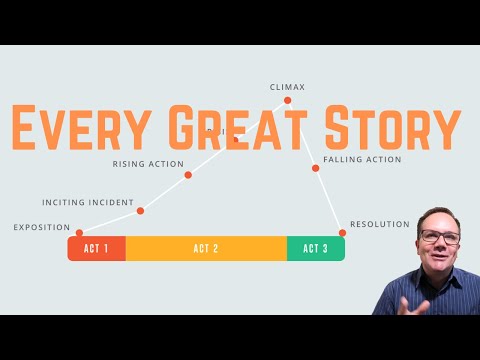
The pattern of simplicity growing into complexity and returning to simplicity, traced through classical music, movies with matching opening and closing images, love stories and a human life from childhood to old age. It places love at the heart on the spinal superhighway into the brain and frames choosing love over fear as the hero's journey.

How Kriya Therapy progresses, shown in two student cases. A childhood memory surfacing during OM Japa is resolved by OMing into the emotion, writing about it, and Tad James's reframe of the past as a storehouse of wisdom rather than a torture chamber; an advanced yogi in Sahaja Samadhi finds his life story rewritten as a love story.

The Bible's most repeated message, "have no fear," read as a dualistic process: a relationship with a form of the divine, alongside yoga's non-dual union in samadhi. Lahiri Mahasaya's visions of Kali and Shiva around samadhi illustrate the back-and-forth, and prayer is framed as harmony between the left brain personality and the right brain's guardian angel.

Why yoga is called deathless, from the Bhagavad Gita and Babaji's saying, told through a story of becoming a Kriya guru under Ashok Singh and easing a friend's burden. The upside-down Aswattha tree and Lahiri Mahasaya's chakra diagram map the nervous system, five elements and OM as divinity that can never be lost.

Why struggling to control the mind in meditation misunderstands the process, shown through escaping a strong grab in martial arts. Rather than fighting the mind directly, practice works from underneath: resonant breathing, sitting very still and the four proofs quiet the body, so the conscious and then the subconscious mind settle by themselves.

Why concentration is approached indirectly: forceful focus awakens the predatory left brain and fails. Like the Karate Kid's wax on, wax off, HRV resonance, sitting very still, the Four Proofs and the Five Breath States build it without naming it. Also names whole mind concentration, balancing the conscious mind with slower brainwaves, as Hakalau does.

Why the common advice to "just push through" in meditation backfires for time, overwhelming deep experiences and kundalini symptoms, and how incremental markers such as the Four Proofs, Five Breath States, Freeze Response, Tranquil Breath and Roll-Up of Consciousness show progress. Closes with befriending the subconscious: going down to go up.

The chakra as a projection of the brain's conflicts into the body, and Ashok Singh's teaching that every chakra has a small, silent origin at the spine and an expressive doorway at the front. OM Japa works back toward the origin, unlike schools that open the doorway, using felt cleanness as biofeedback to find bliss in every chakra.

Using the Cute Baby Meditation to strengthen the connection to the left amygdala, then transferring that felt love to a chosen Ishta Devata for a stronger Bhakti practice. Covers finding a picture that sparks instant love, holding the feeling as long as possible, and how this dualistic bliss carries into non-dual meditation.

Building a meditation practice from five minutes to twenty and beyond by skill and enjoyment rather than time: resonant breathing, sitting very still, noticing the Four Proofs, alternating doing and being, then the tranquil breath, freeze response and roll-up, with Cute Baby Meditation and Hakalau toward samadhi. Explains why forcing a set duration backfires.

The Ho'oponopono forgiveness prayer as Tad James taught it: filling oneself and a difficult person with light, speaking and listening, forgiving, and cutting the aka cord. Brother Bhaktananda's Peace and Harmony prayer is given as a parallel, with stories of relationships shifting and the prayer framed as the start of psychic development.

Whether chakra seed sounds (Lam, Vam, Ram, Yam, Hum) beat OM. Explains OM as the inner sound upholding ether and the elements, A-U-M as creation, preservation and destruction, and the Holy Ghost as OM. Variations like Om Nama Shivaya or Ong are fine to test against the balance needed through the gauntlet of sleep.

A catalogue of the freeze response sensations that can arise in meditation, framed as pratyahara: deep stillness, shell-like skin, numbness as a dimming of body perception, missing or stretched limbs, a ghost-like body, a cool trickle along the dorsal vagal, expansion, and samadhi. Resonant breathing plus sitting very still is given as the way to induce it.

The spiritual eye as a road sign in meditation rather than a goal, and how it progresses from a distant light that grows until it wraps around the meditator at the threshold of absorption. Covers its forms, from white and yellow rings to the blue center and star, why it drifts, and chakra reflections.

Two moments to relax the face in meditation: self-massage of jaw, forehead, scalp, occiput and a cranial sacral jaw point before sitting, and a stepwise "relax, step back" into the medulla after the practice. Explains through polyvagal theory why the face carries the ventral vagal, and why yogis retreat to the dorsal vagal.

Chakras taught as six personalities, from Ashok Singh's reading of the Bhagavad Gita: five Pandava brothers and Krishna. It links them to Freud, Jung and the Kahuna's three spirits, then maps them onto Sesame Street characters. It also covers negotiating with these inner forces, the householder path, and rolling up consciousness to the inner guru in the medulla.

Big Bear Retreat - Sept 23-25Announcement
Announcement of a three-day retreat in Big Bear, California, September 23–25, co-hosted with Kerry and Colin Smith. They lead awakened breathwork and sessions on relationships; he teaches and leads three meditations a day and offers one-on-one in-person Kriya initiation. The retreat is all-inclusive with vegan meals, and every event is optional.
A simple exercise for building intuition in daily life: reduce a choice to a binary yes or no, then feel each option through the body by stepping toward it or weighing it in the hands, switching sides to double-check. Cute Baby Meditation and Hakalau deepen it, and muscle testing is compared.

How to tell whether OM Japa in the chakras is working: a test of OMing into a negative emotion until it is gone, finding the chakras in a general way and building a feedback relationship with each, and three signs of success. Also covers secondary gain and the Roll-Up of Consciousness the practice leads to.

How mind reading can arise naturally from meditation as perception clears, illustrated by stories of Ashokji and students. Covers the yogic warning about powers, an NLP sensory acuity exercise for reading faces, Derren Brown, and energetic protection exercises (celestial fire, shields, the balloon, mana with the Ha breath), alongside compassion and boundaries.
How EMDR eye movements, a left-right trance technique, a long drive, walking, running and sitting in the dark all engage the right brain's expansiveness, just as Hakalau does. Also explains carbon-oxygen exchange and how a lowered, nasal breath rate gives the yogi a runner's high at home.

Why unbelieved affirmations can split the mind into conflicting parts, as Tad James warned, and how affirmations pass through the subconscious to the Higher Self. A method from The Power of Your Subconscious Mind: repeat one word, feel what conflicts with it, and clear that with writing, Time Line Therapy, OM Japa or a Huna fire ceremony.

Persistence in a lifelong meditation practice, framed as "relaxed tenacity": a flexible, sticky grasp learned in knife-disarm training rather than a tense bulldog grip. Stories of Don Angier's lifelong martial-arts practice and the Galaxy Quest motto "never give up, never surrender" show how failures stop mattering on the long road to enlightenment.

A July 31st half-day live event in San Diego, pairing Kerry's breathwork with his meditation teaching. Topics previewed: cleaning through OM Japa in the chakras, HRV resonance, Kerry's report of less stress and anxiety, and practice aimed at self-sufficiency within a first ten hours.

A bedtime prayer technique for getting answers from the higher self through a teaching dream: boil a question down to its essence, feel the divine, ask confidently and breathe the question into it every night. Also covers why the simple question must pass through the subconscious, answers that arrive by day, and the Kahuna totem pole of three selves.

Why trying to "kill the ego" is a misunderstanding, prompted by a viewer stuck in a loop after reading Eckhart Tolle. Covers Freud's id, ego and superego, transcendence into the higher self, sahaja samadhi and coming back renewed, and disidentification as the healthy practice behind the idea.

New Class July 31st in San DiegoAnnouncement
An in-person half-day class in San Diego on July 31st, pairing Kerry and Colin Smith's breathwork with a two-hour session on HRV resonance, the Four Proofs and Sitting Very Still. It outlines the three underlying processes of meditation and contrasts the ten-thousand-hour rule with reaching competence in the first ten hours through biofeedback.

The Star of David read as a symbol of meditation: the upward triangle is the mountain of the yogi sitting still, the downward triangle the divine's response, and their union integration into daily life. The Body of Myth is recommended for reading Greek myth and Mount Olympus as a Western meditative heritage, illustrated by a Brother Premamoy story.

How to feel the third of the Four Proofs, pressure or tingling of the Dorsal Vagal Complex along the spine, as an easier alternative to the warm and cool spinal currents one Kriya lineage stresses. A review of the four proofs leads into guided rescue breaths, breath holds with recovery, and shaking, with Matsyendra's twist read as turning inward.

How agreeable spiritual people can avoid becoming doormats by showing a little strength, a "hiss" rather than a bite. Stories from Yogananda, an Aikido teacher and Winston Churchill show preemptive pushback, ambiguity and humor. The video also gives advice on coaching children through pecking-order aggression.

How healers use the Ha breath to push energy through the body, and how breathing into an ache directs the subconscious to that area. OM Japa in the chakras with breath works the same way. Lahiri Mahasaya's tradition forbids breathing through the brain, shown by a spinning-world episode after a Khechari practice.

A four-part program for lower back pain: the Mahamudra forward bend done on the in-breath, the spinal twist (Matsyendrasana) repeated through the day, a psoas stretch with one leg hanging off the bed, and a friend's elbow sunk into the piriformis. It also explains why massaging the lower back itself worsens the problem.

Whether meditators should share their spiritual experiences, despite organizations that say never to. Sharing sincerely with receptive friends, a teacher or a diary grounds an experience and counters self-doubt, while bragging and unreceptive listeners are to be avoided; Anna Wise's advice is cited.

Six practices for carrying meditation through the day: AMOL breathing in stressful moments, OM-ing into arising emotions in the chakras (Kriya Therapy), Hakalau for the right brain, the Cute Baby Meditation and its Bhakti form, the angel exercise, and practicing the presence after Brother Lawrence. A closing section links that felt presence to the layers of samadhi.

How OM Japa in the chakras works in the brain. Chanting into the six chakras interrupts the brain's outward projection, so consciousness rolls back up. Alternating chant and silence fills and empties the left hippocampus. Like a flicked light switch, this shorts out the inner voice and gives a deeper taste of the right brain's peace.

An alternative to Khechari mudra for those not yet able to reach the nasal pharynx: raising the tongue to stimulate the vagus nerve, and feeling into the sphenoid to take imagined sips of amrita. Covers Ashokji's iron-filings image of Khechari's upward pull and the energetic 'wax' between tongue and pituitary.

The opening chapter of the Bhagavad Gita read as a lesson in prayer: Arjuna, the third chakra's fear, turns to Krishna, the medulla and higher self. Explains why the left brain is built to lean on the right, whom to pray to, and pairing the Huna prayer process with Cute Baby Meditation.

How Vedanta's non-dual view and Sankhya-based yoga fit together: Vedanta is the teacher describing the destination from above, and yoga is the student's pathway up from below. Using a house blueprint and a radio, the video presents techniques like the Three Essentials as ways to quiet the mind toward the non-dual state. Neither view is complete alone.

Keeping a short daily minimum — five minutes of HRV resonance — as a golden thread that gives life meaning, and why stacked skill beats long forced sittings. On unmotivated days, varying the practice instead of powering through: Cute Baby Meditation, free-flowing OM Japa, Hakalau, grounding, prayer. Also how contacting the right brain distorts time.

The Aikibudo principle of being one inch from success, shown in an Aikido demonstration and applied to meditation. Examples include a kinesthetic yogini who felt pressure where others saw a lotus, a student reaching the Higher Self by practicing dead tired, doing less and worse, and small experiments with Hakalau, OM Japa and HRV resonance.

Huna philosophy as taught by the Hawaiian kahuna Taneo Sands Kumalae and preserved by Tad James: pain as unattended communication, aka cords, forgiveness, and connecting with the lower self before the higher self. The video also walks through her fire, earth, water and candle rituals and a cord-cutting exercise to do before meditation.

Why forcing oneself into line backfires and gentleness builds lasting change in meditation and life. Authoritarianism brings blowback; inner cleaning with Time Line Therapy, OM Japa and HRV resonance changes the subconscious instead. Illustrated by a samurai sword, the Sphinx, the Tarot Strength card, Ashokji's advice on getting back up and the Buddha's middle way.

A starting route for newcomers to deep meditation: five-minute sessions with the Resonant Breathing app, the Seven Steps to Deep Meditation playlist on why resonant breathing calms the mind, Hakalau peripheral-vision practice, then the Tranquil Breath and Big Bliss trainings, Patreon satsangs, and in-person Kriya Yoga initiation. Success is framed as skill, not long hours.

Toning — sounding vowels out loud through a chakra — as a way to release emotional material stuffed into the subconscious, compared with mental OM Japa in the chakras. Covers free-flowing vowel sounds, finding a private place to be loud, and how music strikes different chakras, with the third chakra as Arjuna the doer.

Stranded In VenezuelaAnnouncement
A fundraising appeal for Guillermo, a former fellow monastic, who is trying to bring his two daughters out of Venezuela to a new home. It recalls serving as his "older brother" in the ashram and swapping T'ai Chi lessons with him. Anyone who gives twenty dollars is offered a kung fu session.

The four binary choices behind Myers-Briggs personality types (extrovert or introvert, sensing or intuiting, thinking or feeling, judging or perceiving), presented as a mask of personality formed in early childhood. Studying that mask points to the conscious awareness beneath it. It also explains why samadhi need not feel like death: only the personality winks out.

Why seeing the spiritual eye in meditation can become a trap: the left brain grasps at the vision and it vanishes. Covers reading the Guru Stotram's "pierce" as going through and out, gaining access concentration through the low-idle-state, and gazing with right-brain expansion, linked to surrender, Hakalau and Bimalananda's hourglass.

Five ways to transcend life's dualistic ups and downs (bliss, laughter, love, meaning and gratitude), opening with Ashokji's insistence that bliss is not happiness. The needs of the lower three chakras drive the ups and downs. The hacks lift practitioners into the upper nervous system through the left amygdala and right hippocampus, with Cute Baby Meditation suggested for bliss.
How the left brain turns people and scenes into memories and symbols, and how pausing to take everything in engages the right brain: listening fully, watching the sky and practising Hakalau peripheral vision. Flow is presented as a back-and-forth between left and right brain rather than staying as the watcher. HRV resonance supports it by slowing everyday breathing.

Time Line MeditationGuided practice
A guided, simplified form of Time Line Therapy meant to wash out the whole timeline daily: eliciting how time is stored, floating above the timeline, then resting before the beginning of time and past the end of time while looking toward now. Opens with a story of a friend's writing block dissolving.

Feedback from the Talking To the Higher Self training (students' downloads, teaching dreams, a vision of Kali and new trust in messages from the true guru) and an answer to a viewer raised atheist: take a guardian angel as ishta. The ishta is framed as a dualistic, left-amygdala echo of the right brain's guardianship, ever new.

Talking To The Higher Self Training ReleaseAnnouncement
Launch of the Talking To the Higher Self training on Meditative Mellows: holding a back-and-forth with the Higher Self, how it works in the brain, the Enlightenment Pathway, brainwaves, the Hawaiian Kahuna pathway, and a progression modeled on Anna Wise. Framed as a dualistic process that sheds light on non-dual Samadhi.
Why Ashok Singh called OM Japa in the chakras, done into emotions as they arise all day, the real Kriya Yoga. Covers emotions projected into the chakras, Lahiri's letters warning of tamasic practice, shrinking the right amygdala, feeling clean as the sign it works, and pairing it with Cute Baby Meditation for bliss.

Why dual and non-dual processes both belong in meditation. Prompted by a viewer's objection to an Ishta Devata prayer process, it covers Anna Wise's Buddhist meditators, the Gita's opening as prayer to the Higher Self, Lahiri Mahasaya's visions of Kali, and how prayer and samadhi draw on the same left amygdala and right hippocampus.

Why the Four Proofs of resonant breathing fade as practice deepens. The proofs mark an ascent into the dorsal vagal complex; then the Freeze Response takes over body perception in stages — numbness, ghost-like limbs, parts disappearing, dislocation, the whole body dimming out — opening into a mini absorption of expanding into space.

Why depending on one person's darshan or shaktipat is anti-yoga, since yoga means running the experiment oneself. Stories of a taunting initiate, Ramakrishna's crane and Krishna's bee show that energy transfer happens everywhere. The guru is presented as a coach rather than a perfect idol. Closes with a bedtime prayer to the Ishta for answers from the true guru within.
2021

The Four Proofs as the litmus test of any Kriya or meditation practice: does it reach the parasympathetic nervous system? Each proof is described, then a check: breathe at HRV resonance until a proof appears, switch to one's own kriya, and see if it holds. OM Japa in the chakras and long breathing define original Kriya Yoga.

How much daily meditation to commit to, framed as three tiers: a five-minute minimum habit, twenty minutes to an hour grown from enjoyment, and long sits made easy by skill in the tranquil breath and freeze response. Ashokji's rule of twelve Kriyas and checking interest shows how to self-regulate without forcing practice into a "house divided."

Prayer as a way to connect with an Ishta Devata, a favorite personification of the one divine source, drawing on Lahiri Mahasaya's samadhis in which he merged with Kali, Vishnu and Shiva. A kidney-stone story of Divine Mother's reassurance leads into the right brain as the guardian window through which the divine looks out.

Four stages of the spiritual eye: a small distant light, a large close light, light wrapping around perception, and meeting the thumb-like self in the download phase. Covers Yoni Mudra for developing it, the view that it is the corpus callosum, and why it is a useful roadmap toward samadhi but not a requirement.

How falling fully into depression as a postulant monk dissolved it into light, and why negative emotions transform when felt apart from their story. Compares Kevin's sit-with-it sessions with law enforcement staff, Buddhist psychology and Time Line Therapy, and gives Ashokji's "real Kriya Yoga": OMing into emotions throughout the day.

How I Left the Ashram - Lightning Experience of KundaliniQ&A and stories
A story from his monastic years: a torn hip ligament, inner conflict about leaving the ashram, and a prayer to Divine Mother answered by a lightning-like bolt down the spine and the voiceless voice. Covers kundalini awakening as becoming aware of inner energy, Ishtas as windows for the divine, and testing higher-self guidance by its results.

How to reconcile yoga's practical, results-driven method with Lahiri Mahasaya's advice not to look for results. The answer lies in the two hemispheres: the left brain's focused grasping versus the right brain's awe and expansion. Hakalau on the spiritual eye, short repeated sessions and easy markers of success such as the Four Proofs make letting go possible.

Meditation as a progression of doing and being: first the work of HRV resonant breathing and OM Japa in the chakras, then Lahiri Mahasaya's paravastha, soaking in the four proofs, tranquil breath and freeze response. Finding life funnier is offered as a sign of transformation. Sessions can cycle between doing and being, with stretching beforehand.

How the chakras arise as brain regions projected into the body, each with an animalistic shadow reaction: possessiveness in the first two, a cold pit of fear in the third, heartache, words stuck in the throat, visions at the medulla. Each chakra is found by its reaction and cleaned with OM Japa as continuous Kriya Therapy.

Being a yogi as an internal pilgrimage rather than outward signs like robes, beads or appearance. Following Lahiri Mahasaya, daily HRV resonance, sitting very still and the four proofs carry practice into the low-idle-state; the yogic life turns from media and political battles for the mind to the people present and the self within.

How to elicit personal values with the NLP question "What's important to me about life?", rank them into a hierarchy across six life categories, and tell towards from away-from values. Also covers comparing values with partners or bosses, and clearing the negative emotions behind them with Time Line Therapy or OM Japa, with a caution to go slowly.

How to remember dreams by lying still on waking and writing down whatever remains, and why dreaming matters to a yogi as a deconstructive force that integrates conscious and subconscious brainwaves. Covers holding a short question for the higher self and interpreting dreams through personal symbology rather than dream books.
Saint John of the Cross's Dark Night of the Soul, read as a process of physical and spiritual purification guided by inner intuition rather than a crisis or divine test. Covers rejecting the philosophy of tests for ownership of one's life, accepting ups and downs in meditation, and unsettling deep states such as the nothingness jhana.

Why meditation is the opposite of escapism. HRV resonance lowers cortisol, awakens the parasympathetic and extends longevity, verified by the Four Proofs; quieting touches the right hippocampus, source of meaning and inspiration; OM Japa in the chakras and Time Line Therapy clear old baggage, making Kriya a continuous therapy parallel to psychology.

Common meditation misconceptions corrected: ignoring the light of the spiritual eye, keeping the body awake, chasing breathlessness, ignoring bliss and inspiration, needing Kundalini energy, powering through, never controlling the breath, and long sittings. Each is reframed through the freeze response, tranquil breath, roll-up of consciousness and the parasympathetic system.

Samadhi as a repeated therapy rather than a one-time attainment: the route through the low-idle-state, tranquil breath, freeze response and roll-up of consciousness into right-brain absorption and the non-dual state. A student's report of feeling himself in a table and a saying of Lahiri Mahasaya illustrate how repeated samadhi, and smaller mini absorptions, slowly reformat perception.
Why automatic movements and shaking appear in meditation: deep practice brings subconscious body processes into awareness, and when the freeze response is shallow they spill into movement, much as in dreaming. Remedies include a longer outbreath, deeper freeze, OM Japa, and a nightly Huna-style prayer asking the subconscious and Higher Self to tone it down.

Hakalau, the Hawaiian Kahuna peripheral-vision technique, taught through a viewer's story of calming his brother's panic attack on a mountain trail. Covers two ways to practice, the shift from left-brain predator mode to right-brain expansion, the yogi's "look but don't look" gaze into the spiritual eye, and pairing it with HRV resonance toward Samadhi.

How much to fill and empty the lungs in resonant breathing: comfort rules, shoulders stay down, and a contracting stomach is fine as the breath progresses toward the Tranquil Breath. Meditation is then reduced to two essentials — an easy, comfortable parasympathetic state and right-brain expansion through Hakalau — plus a reminder not to take life too seriously.

Marshall Rosenberg's Nonviolent Communication taught as four steps (observation, feeling, need and request) for peeling back complicated speech to the primal need beneath it. An ashram story about a supervisor upset over two movies shows the method at work. A family chores example follows, along with ways to voice one's own needs.

How celebrating small successes in meditation, such as warm hands or a faint tingle, reinforces both psychology and the nervous system's mapping into deep states. Includes breathing through the heart chakra, left then right, to find a little bliss, spreading it through the chakras with OM, and letting hands hot and heavy expand into a mini absorption.
The mistake of trying to force the breath into the sushumna during spinal breathing, and the alternative of flowing with a long outbreath that stimulates the Dorsal Vagal Complex, equated here with the sushumna. Meditation then crosses from left-brain identification into right-brain expansion, with a dividing line drawn between absorption and samadhi.

Three core Kriya teachings of Ashok Singh, shared for Guru Purnima: seeking the bliss behind energy, OM Japa in the six chakras to clean and disengage from the body, and resting on the medulla. Also covers the roll-up into the brain, the download phase ("Google God"), and the true guru as an inner experience.

The transition states drawn from Elisabeth Kübler-Ross's work with the dying (status quo, shock, denial, anger, bargaining, depression, testing and acceptance) and how recognizing them speeds acceptance of any change. Depression is framed as a sign of approaching acceptance, and surrender as a shift into the right brain.

How one-pointed concentration, doing one thing at a time, comes from the low-idle-state of resonant breathing. That focus then widens until one thing fills the mind as absorption and samadhi. Hakalau is given as a model of the process and tied to Shambhavi Mudra, with a story of a Rama samadhi on retreat.

Resonant Breathing App Is Here!Announcement
The release of the Resonant Breathing app for Android and iPhone, built by developer John Goodstadt. Covers finding a comfortable breath rate by experiment, turning off the phone's sleep setting, switching the bell to a flute cue, and using resonant breathing as a warm-up before an existing meditation practice.

Remembering My Kriya GuruQ&A and stories
Memories of Kriya guru Ashok Singh after his death in June 2021. They cover his engineer's idea of experience as orthogonal, a compounding parable on good advice, OM Japa in the chakras as all-day Kriya Therapy and noise-cancelling, and his counsel to follow bliss over energy, ending in grief and celebration.

Polarity is a problem that arises when meditation charges the upper nervous system while the lower chakras still hold uncleaned baggage. The result is sudden outbursts after peaceful sittings. Ashok Singh's remedy follows: go back to the first kriya and do OM Japa into the lower chakras, feeling into each center.

A martial demonstration of coming from behind: a punch is redirected from behind the elbow rather than caught from the front. The same principle is applied to meditation. Instead of fighting the mind head on, the yogi works through the breath and body, lowering their idle with heart rate variability resonant breathing so the mind calms.

How Bhakti Yoga, prayer, Metta and the Cute Baby Meditation all activate the left amygdala, framed as brain weight lifting. OM Japa shrinks the right amygdala, Hakalau and quiet grow the right hippocampus, and the Enlightenment Pathway ends in expansion and bliss, the hallmarks of samadhi.

How to concentrate and learn better by dropping from the stressed beta brainwave into slower alpha and theta states rather than pushing harder. Covers Yogananda's apple visualization exercise, Tesla and Edison, Hakalau before class and exams, and alternatives to visualization through feeling, hearing, taste and smell.

The four quadrants of time management applied to a meditation habit: meditation belongs to the second quadrant, not urgent yet vitally important, so it gets crowded out. Ranking the answers to a values question, "What's important to me about my life?", shows why it falls off, and a two-page writing therapy exercise handles anything unwelcome on it.
Why a quieter mind from meditation can start picking up other people's thoughts, explained through cold reading's face and voice cues and Persinger's magnetic-field research. Also gives a telepathy exercise for two close people (sending shapes, then words, then images from farther away) and warns against letting it become a side path.

The Download Phase that comes before the non-dual state: resting attention on the medulla, rolling up into the brain, then expanding across into the right hippocampus, where answers arrive as images, a voice or sudden knowing. The left brain brings the question, the right brain answers, and the two dance back and forth.
Delayed gratification as a principle for life and meditation, illustrated by the Stanford marshmallow experiment, video games, good works and karma, alchemy, and Jack and the Beanstalk. Small early results, like one of the Four Proofs, compound into the Freeze Response and Tranquil Breath, toward bliss and expansion in the brain.

Why building meditative skill in short, comfortable sessions beats forcing long sittings. Pushing past comfort switches on the sympathetic system and breeds a love-hate relationship with practice; the Gita's Pandavas stand for the parasympathetic army to stick with. Recommends compounding skills and stacking short sessions with breaks in between.

Three phases of the Tranquil Breath: a rapid shallow belly breath, a longer shallow breath, then one so slow it seems absent, as in a sleeper. Explains why this low-idle-state, not forced breathlessness, enables natural concentration, absorption and samadhi, and links it to Patanjali's fourth phase of breath.
What Kundalini is — the subconscious movements behind breath, heartbeat and healing, met as meditation reaches slower brainwaves — and how to handle an awakening without powering through. Remedies include OM Japa in the six chakras, Hakalau, drawing spiritual-eye pressure back to the medulla, expanding, hot and cold showers, and asking the unconscious mind to make sensations smaller.

Five modern obstacles to meditation: information overload raising cortisol, starch and gluten raising the breath rate, too little fasting, night-time light disrupting melatonin, and less physical activity. Controlling the breath with HRV resonance, then letting it pause, leads into the Tranquil Breath, so watching and controlling the breath work together.

How Kriya Yoga's OM Japa in the chakras changes the yogi through the brain's Enlightenment Pathway: the charged right brain and corpus callosum as the first knot, a shrinking right amygdala, and bliss in the left amygdala joined with expansion as Samadhi. Compares the cleaning to Time Line Therapy's positive-self-future learnings.
Karma read through the NLP model of communication: samskaras as memories stored on the timeline, vasanas as behavioral tendencies, ashaya as intention. Subconscious filters that delete, distort and generalize shape what each person perceives, so clearing past decisions with Time Line Therapy or OM Japa changes karma; affirmations work best as small, believable steps.

Stone samadhi, a warning from a Khechari lineage guru: deep absorption with slow breath and the freeze response but no conscious awareness, giving physical but no psychological benefit. It is read through brainwaves as pulling away from rising subconscious material; remedies include keeping meditation apart from sleep, accepting oneself, counting breaths and sleeping enough.

How disassociation differs from the spiritual watcher stance, explained through NLP parts that wall themselves off in the neurology, and why emotions must be embraced before they are let go. The Huna path from the conscious mind down to the subconscious and up to the higher self explains how gamma brainwaves are reflected in a still, low-idle-state.

Why spiritual progress means integrating body and subconscious rather than distancing from them, argued from the Mahabharata's Satyavati story and a Buddha quote on mindfulness of the body. Mind Mirror readings then show beta, alpha, theta and delta brainwaves coalescing into the awakened, diamond and evolved mind.

An Aikibugei teacher's remark that it's all a trick frames meditation techniques as tricks that become skills, stacked to activate the Dorsal Vagal Complex, right hippocampus and left amygdala. Exercises follow: Hakalau, taking everything in, relaxing the tongue to quiet left-brain words, Hakalau to shift emotions and desires, and holding two points at once.

OM Japa in the chakras as the insurance policy built into Lahiri Mahasaya's Kriya Yoga. Chanting OM into each chakra works through the brain's projections to shrink the right amygdala, so deep states such as astral travel, meeting the guardian and DMT experiences bring less fear. Ends with how to begin, from coccyx to medulla.

How the Freeze Response arises in meditation: the vagus nerve's ventral 'party' front and dorsal introspective back, and the long exhale's pressure on the Dorsal Vagal Complex. Its sensations — tingling, numbness, vanishing limbs, cool waves — are read as interruptions of the left brain's body map, with advice to build up from short sittings.

How Kriya Yoga and HRV resonant breathing build inner sensitivity by integrating subconscious material, why Lahiri Mahasaya skipped Yama-Niyama, and why striving for outward perfection is unhealthy. Daily writing about one issue draws subconscious patterns into conscious choice, and integrating slower brainwaves prepares the way to gamma states.
Sensory acuity, the foundational skill of neuro-linguistic programming: how NLP models success, why the ventral vagal nerve shows inner states in the face, and a partner drill reading neutral, funny, sad, shocked and angry states. A viewer's question on signs of spiritual progress is answered with breath rate, the Four Proofs and the Five Breath States.

Time Line Therapy WalkthroughGuided practice
A follow-along Time Line Therapy session: eliciting the timeline, floating above it with active imagination, and releasing one small negative emotion from its first instance after the unconscious mind agrees. Closes with the rules for a positive learning (positive, self, future) and Tad James's order for clearing anger, sadness, fear, hurt and guilt.

A stage-by-stage map for keeping meditation an adventure: resonant breathing that syncs heart and breath, the Four Proofs, body bliss, Five Breath States biofeedback and the Tranquil Breath. It then covers the Roll-Up of Consciousness and the Three Essentials, and ends with absorption and samadhi through the right hippocampus.

The Stoic Circle is an image for Epictetus's teaching that peace comes from focusing on what is within one's control and letting go of everything outside it. The video adds Tad James's cause-and-effect equation and describes yoga as the most self-reliant Indian system, with resonant breathing as a way back to an inner bubble of peace.

The soul's old desire for meaning, traced from an Omar Khayyam New Year stanza through Yogananda, Freud and Jung, and Viktor Frankl to the yogi's answer: look inside. Resonant breathing carries meditation toward the right brain, where the right hippocampus stores images and so holds meaning, bringing downloads from the higher self.
2020

An advanced use of the first of the Four Proofs, hands hot and heavy. After finding a comfortable resonant breathing rate and sitting very still, the warm fullness is imagined spreading through the body and then outside it. Alternating between inside and outside is used to induce the right hippocampus and its view of the world as one.

Merry Christmas to You and Yours!Announcement
A short Christmas greeting in which the family sings "We Wish You a Merry Christmas," starts the song over for a second try, and sends holiday wishes to viewers and their families.

Exercises for developing the spiritual eye so it appears spontaneously in meditation: the OM technique of pressing the ears and eyelids, staring through a hand on a white wall to learn to dilate the eyes, bhramari or Yoni Mudra, and Hakalau. The original name Yoni Mudra is read as a rebirth into the right brain and back.

Why doubt so often accompanies first experiences of the spiritual eye, told through students who overlooked the deep blue cave. Describes the many forms the spiritual eye can take, and recommends noting experiences in a diary or sharing them with supportive friends, since doubt can persist even into a first samadhi.

Three levels of listening: talking over others, the quick back-and-forth among friends, and taking in someone's whole train of thought until "the caboose" arrives. The third level deepens relationships. In meditation, it becomes simply listening to the four proofs, tranquil breath and freeze response in the after-effect poise state.

The five breath states: how the breath touches the inside of the nose shifts as the turbinates retract deeper into the parasympathetic nervous system, making a free biofeedback tool. Each state is described, then a routine of checking the nose between rounds of HRV resonant breathing, combined with the Four Proofs and sitting very still.

The medulla as the pivot of Kriya Yoga, confirmed by a student's report that Nath yogis call it the Samadhi Chakra and the breath center. Explains how the medulla regulates breath and heart via the carotid sinuses, and why tranquilizing the breath there leads toward samadhi.

Free Ourselves From Anxiety with Time Line TherapyGuided practice
A guided Time Line Therapy process for clearing anxiety about future events. Football upsets illustrate that outcomes can't be known, so imagining a positive one becomes a self-fulfilling prophecy; then it leads three rounds of floating above the timeline, through a positive outcome of an anxious event, and back to now.

Concentration that can "quarry stone" as two forces working together: firm foveal attention that keeps showing up, and relaxed, open peripheral attention. Draws on Bodhidharma's cave, a sticky knife grasp from martial arts, a foveal–peripheral switching exercise, and a glass of muddy water settling as an image of meditative progress.
Why a practice that brings depression is the wrong tool, framed as a journey from the left brain's words into the right brain's meaning and non-dual state. Covers spiritual light, the higher self download, absorption, the slowing breath, inspiration during meditation, and why trying to kill the ego creates conflict.
How OM Japa in the chakras works as a lifelong, continuous therapy in Kriya Yoga. The limbic brain projects emotion into the body like a reflection in water. OM disturbs that reflection so it returns to the brain. This shrinks the right amygdala, separates emotion from story and turns the past into a storehouse of wisdom.

The Four Proofs of meditation laid out one by one: hands hot and heavy, lip tingling, pleasurable pressure on the dorsal vagal complex, and skin tingling. Each is framed as a biofeedback signal arising from heart rate variability resonant breathing, with advice for checking them by circulating the mind around the body.

Sitting Very Still (SVS) as the base principle beneath the deeper stages of meditation, and how HRV resonant breathing makes it easy. Stimulating the dorsal vagal complex brings on the freeze response, with guidance on itches, slouching posture, and staying relaxed in the parasympathetic rather than tense.

The three rules of the Holy Trinity of Breath that induce heart rate variability resonance: under seven breaths per minute, an outbreath longer than the inbreath, which presses the diaphragm on the dorsal vagal nerve, and no pauses at the top or bottom. Breath holds come later, once this base is in place.

Guided Meditation of HRV Resonate Breathing at 3 BPMGuided practice
A paced breathing session at three breaths per minute, done along with him, to bring on heart rate variability resonance with the Holy Trinity of Breath. A short spoken introduction and one deep breath lead into a breathing session set to music.

Guaranteed Bliss Guided MeditationGuided practice
A guided progression for feeling bliss in the body: sense which side feels more joyous and use breath and active imagination to pass that feeling to the other side through the caudate nucleus. The same left-right transfer is then repeated in each chakra up to the medulla, with the chakras' continuum from muddy to clean to ecstatic.

Guided Meditation of HRV Resonate Breathing at 3.5 BPMGuided practice
A guided session of heart rate variability resonance breathing at 3.5 breaths per minute, built on the Holy Trinity of Breath. A short spoken introduction asks listeners to find a comfortable breath and follow along. Then the paced breathing begins.

Guided Meditation of HRV Resonate Breathing at 4 BPMGuided practice
A paced breathing session at four breaths per minute for inducing heart rate variability resonance with the Holy Trinity of Breath. After a brief spoken introduction, the practice is to find a comfortable breath and follow along.

News that a Kriya organization has restored OM Japa in the chakras and Khechari Mudra instructions to its lessons, and why it matters. Covers Lahiri Mahasaya's warning that Kriya without OM Japa is tamasic, the chakras as projections of the limbic brain pictured as the Gita's upside-down tree, and OM Japa cleansing the chakras for the roll-up.

Guided Meditation of HRV Resonate Breathing at 5 BPMGuided practice
A guided paced-breathing session at five breaths per minute for inducing heart rate variability resonance with the Holy Trinity of Breath. After a short introduction and one deep breath, the rest of the session is breathing along with the pacing.
Guided Meditation of HRV Resonate Breathing at 6 BPMGuided practice
A follow-along session of heart rate variability resonance breathing at six breaths per minute, using the Holy Trinity of Breath. A brief spoken introduction asks the listener to find a comfortable breath pace and follow along, then begins the session with a full deep inhale.
Guided Meditation of HRV Resonate Breathing at 7 BPMGuided practice
A paced breathing session at seven breaths per minute for inducing HRV Resonance with the Holy Trinity of Breath. A short spoken introduction asks listeners to find a comfortable breath rate and take one deep breath before the follow-along breathing begins.

Systema burst breathing for handling intense pain: a quick inhale through the nose and a sharp burst out through the mouth, which jabs the third chakra, a projection of the right amygdala, to release fear and let the brain work. Demonstrated under a painful arm lock, with cycling into slower breaths to limit hyperventilation.

Why celibacy is not required in Kriya Yoga, drawing on Lahiri Mahasaya's insistence on the householder life, guidance recorded in Purana Purusha, and Banmali Lahiri's image of the pressed spring. It also argues that a rush of Kundalini energy is unnecessary next to the Freeze Response, Tranquil Breath and OM Japa in the chakras.

Ujjayi Pranayama, also called the Victorious Breath and the Hawaiian Ha Breath, taught first as a voiced mouth breath with a Kahuna-style Mana variation, then refined into a quiet long nasal outbreath. Covers how throat constriction lowers heart rate via the carotid sinuses, and Richard Gevirtz's teaching of long breathing to uptight children.

Paravastha, the after-effect poise state of Kriya: why every meditation needs a phase of enjoying after the work of Kriya, resonant breathing and OM Japa. It lists poise states to soak in, from the Four Proofs, calm and the Tranquil Breath to the Freeze Response and the Roll-Up, and explains their purpose as a setup for absorption and samadhi.
Devotion in meditation recast as interest: keeping a daily minimum, coming back again and again, and putting the mind fully on the technique. Interest speeds results in HRV resonant breathing and OM practice. A daily list of reasons for practicing stirs that interest, and Hakalau's peripheral-vision expansion completes the equation.

The pineal gland's secretion of melatonin and natural DMT, 'phase changers' that set how profound a meditative experience feels, and why darkness, silence and fasting matter. Drawing on Persinger and Murphy's research, the video argues the right hippocampus, holder of meaning and light, is the seat of the soul rather than the pineal.
Handling persistent mind chatter in meditation by ignoring it rather than fighting the left brain, while returning to heart rate variability resonance breathing and the Four Proofs. A wrist-lock analogy illustrates disengaging, and a remembered Lahiri Mahasaya saying advises leaving chatter behind.
Yogic Writings and Thank You!Announcement
A thank-you to Patreon supporters and a pointer to the private videos and short writings posted there. The writings cover polyvagal theory, the Pandava brothers of the Gita read through it, and an "Enlightenment Equation" that condenses the path to Samadhi, all meant for a book in progress.

Bliss Bounce MeditationGuided practice
How the caudate nucleus senses inside the body and shares between left and right, and why that matters for Kriya sensing in the chakras. A guided exercise modeled on Todd Murphy's follows: find the lightest spot on one side, blow it through that side with the Ha breath, then bounce it between sides.

A comparison of the Wim Hof method with heart rate variability resonant breathing, sorted into three categories of breath work: resonance, cleansing breath and breath holds. Explains why hyperventilation alone fails to oxygenate the muscles without carbon to exchange, why running or cold shivering helps, and how lengthening the breath leads toward the Tranquil Breath.

A progression training the lungs into diaphragmatic breathing down to the pelvic floor: hand tests on chest, ribs and back, then bags of rice or beans on the stomach. Two pelvic floor exercises follow — a gut pull-up and a forehead-to-ceiling crunch — that ease the lower back and support the long HRV breath engaging the dorsal vagal complex.
How to train the lotus posture (Padmasana) with a series of hip and knee stretches, and why it is harder for Westerners raised in chairs. The lotus slows blood flow in the legs through femoral artery pressure and gives a stable seat. It is framed as a side project, with heart rate variability breathing coming first.

How to sit comfortably for meditation without restricting the breath: a folded pillow wedged against the sacrum, hips higher than the knees, a towel under the hands, and the rib cage left free to expand front, sides and back. A side-to-side and forward-back sway then settles the body into an effortless balance.

How the Four Proofs and the Freeze Response fit together as a mountain: the rapture of concentration climbs from hot, heavy hands to whole-body skin tingling, then descends into the Freeze Response. Parts of the body disappear from awareness, consciousness rolls up into the brain, and the deep bliss of the left amygdala replaces the rapture.

The breath as a ratchet wrench for HRV resonance: the in-breath stimulates the sympathetic system, while the longer out-breath presses on the Dorsal Vagal Complex and brings the Four Proofs. As CO2 tolerance rises, heart and medulla ask for less breath, leading into the Tranquil Breath. Closes with a student's report of the spiritual eye.

Googling God is Ashok Singh's term for the answers that come when Kriya Yoga brings the yogi to the medulla, the sixth chakra. Like a badly worded web search, early practice gets few answers. Cleaning the karmic seeds in each chakra and resting in non-dual bliss brings clear answers, sometimes days later, and finally merging with God.

Directing Kriya Yoga practice toward Ananda, or bliss, explained by Ashok Singh in interview. A road-map analogy of constant guidance and control and a prism splitting white light into Maya's spectrum frame the return to the non-dual; Ananda is defined through giving food to a starving beggar and a student's eureka moment.

An interview with Ashok Singh on how his uncle steered him from Self-Realization Fellowship's mouth-breathing Kriya to Maheshwari Prasad Dubey, who lived at his home for almost a year. Singh explains Kriya as cleansing behavior stored in six spinal centers, with OM as vibration suppression, Khechari calming the nervous system, and the Gita as Kriya guidance.

Patanjali's eight steps of yoga set beside the six steps Lahiri Mahasaya taught, which leave out Yama and Niyama. Deep meditation surfaces old subconscious material to resolve and makes the practitioner more sensitive, so morality refines itself rather than being rejected; a student's account of inner joy illustrates the point.
Kriya numbers, or long versus short meditations, framed as climbing a mountain: skill and competence must come before time, and later they shorten it. Covers the pitfall of forcing long sittings until the practice is hated, the remedy of short HRV sessions that bring the four proofs, and Lahiri's advice to enjoy the tranquil breath.

The nimbus painted around saints, explained as prana rising into the brain, with Lahiri Mahasaya's phrase "the prana rose" preferred over kundalini language. Covers signs such as skull pressure and a pull at the spiritual eye, drawing the energy back to the medulla, grounding it into daily life, and a Mind Mirror reading that tracked the pressure.

Why Kriya Yoga centers on the medulla: a way to find it mentally by imagining a screw at the base of the skull, and why resting attention there lowers the heart rate and lengthens the breath. The medulla is recommended as the place to rest in the after-effect states following breathwork.

The Cute Baby Meditation, Todd Murphy's technique for strengthening the left amygdala as an instant form of Buddhist Metta. Explains how charge built in the right hippocampus jumps a minimized right amygdala into left-amygdala bliss, then gives the practice: look daily at one instantly cute picture and grow the feeling, later extending it to gratitude and compassion.

A no-touch Aikijujutsu defense against a punch to the face, demonstrated and then explained. Rather than chi, the redirection works because the unconscious mind takes over a strike near its end: a finger placed in front of the target becomes the new target and is moved aside.

A practical meditation progression for Navy SEALs, special ops and veterans, prompted by a mentor's email: HRV resonant breathing with three entry breath ratios, the Holy Trinity of Breath, the Four Proofs as signs of parasympathetic activation, and the Rescue Breath for stressful situations. Each is framed as a reliable skill for meeting stress.

Kundalini explained through driving a car: attention normally stays out the window while gear-shifting is left to the unconscious mind, but meditation opens up the cockpit, bringing unconscious processes into awareness. The work is learning to move between inside and outside at will and to integrate what surfaces.

How heart rate variability breathing fits in front of Kriya Yoga or any other practice: establishing resonance first, confirmed by hands hot and heavy, deepens the practice that follows. Also covers using HRV through the day during a time of crisis, with a brief Rescue Breath exercise.

The Big Bliss Training is Here!Announcement
Release of the Big Bliss training at meditativemellows.com, which follows the fourth phase of breath training on the Tranquil Breath. The new training centers on the bliss of the left amygdala, the "avalanche of bliss" that yogis and saints describe. It is offered as something positive to do during lockdown.

Ways to boost the immune system during the coronavirus lockdown: vitamin C from fruit and acerola powder, introduced through the story of scurvy on Vasco da Gama's voyage; boron to strengthen cell membranes; and heart rate variability breathing to balance the nervous system and avoid cortisol overload. Closes by announcing the Big Bliss training.

How the NLP eye accessing chart locates visual recall and visual construct, and a two-step method for reversing dyslexia: read books and memorize word shapes in the visual recall field. Shambhavi Mudra is taught as gently looking up to induce the alpha brainwave, with peripheral vision opened, as a way of accessing the right hippocampus.
A quick breathing technique for stressful moments: one short inbreath and one very long outbreath, drawn from Don Angier's samurai art, to stimulate the parasympathetic nervous system through the Dorsal Vagal nerve. Also covers a lift test for grounding and a hand mudra from Anandamayi Ma that draws energy toward the heart.

Why feeling even a little in meditation matters: a small result shows the path works and more is possible, and celebrating it reinforces the habit and counters self-doubt. A qigong teacher's lesson is applied to HRV resonant breathing and the Four Proofs, with each proof treated as a small win worth noticing.

Why progress toward self-realization runs on a sliding scale rather than a one-and-done switch. Three scales are traced: interoception (pratyahara) from heart rate variability through the four proofs and freeze response into absorption; the real becoming unreal as the spiritual eye grows real; and Kundalini, from prana rising through OM Japa to a full-blown awakening.

Self-realization defined through Lahiri Mahasaya's kriya numbers: 12 breaths for pratyahara, 144 for self-realization, 1,728 for dhyana, 20,736 for samadhi. At about 144 kriyas the body fades and the spiritual eye appears as "the one truth," explained through NLP's "the map is not the territory" and the brain's filtering of the senses.

Why entering the spiritual eye is so hard and how to do it: the grasping left brain cannot carry the yogi into the cave, so the right brain must be induced through surrender, expansion and dilated eyes. Draws on Yogananda's poems "Prayer at Night" and "Cup of Eternity", Iain McGilchrist, and a story of years of frustration.

The Huna model of three selves: the conscious middle self, the subconscious lower self and the winged superconscious higher self, as carved on Kahuna totem poles. Its rule is that the higher self is reached only through the subconscious. The video applies this to simple, positive prayer and to meditation, where resonant breathing lowers the idle into trance.
The third of the Four Proofs, sensing pressure on the dorsal vagal nerve, and an exercise for finding it. After recapping resonant breathing and all four proofs, rounds of a short in-breath and a very long out-breath press the chest against the spine while noticing warmth, coolness or tingling without preconceived ideas.

Heart rate variability resonance in a podcast interview with Ashley James: how the out-breath slows the heart through the dorsal vagal nerve, and how slower breathing restores carbon-oxygen exchange. The Holy Trinity of Breath is taught with a one-minute guided round and the Four Proofs, alongside the Five Breath States and Hakalau.

Why deep concentration comes from a brief point of focus opened into peripheral vision and light trance in the right hippocampus, rather than from narrow left-brain focus. Hakalau, Thomas Edison's ball-bearing trick and Tesla's mental pictures show how the aha moment arises.

Why the idea of "breathlessness" can block deep meditation: the unconscious mind, guarding survival, ejects a meditator told to stop the breath or heart. Lahiri Mahasaya's emphasis on the Tranquil Breath is offered instead, reached by lowering breath rate through HRV breathing and CO2 tolerance work, framed as a pause or low idle.
A year-long meditation progression built on HRV resonance: hands hot and heavy, then the rest of the Four Proofs (lip tingle, dorsal vagal pressure, skin tingles), then the Freeze Response and its sensations of stone, eggshell and numbness. Each stage is practiced until it shows up in nine out of ten sittings.
2019

Research on sensory neurites in the heart, heart-transplant memory stories and the holographic model, taken as evidence that the brain is projected throughout the body. Explains the chakras as these projections and why OM Japa into them affects the psyche. Examples include chanting OM into the third chakra for fear and into the heart for old hurts.

Merry Christmas to everyone! Happy 2020!!Announcement
A short Christmas and New Year greeting in which 'We Wish You a Merry Christmas' is sung twice, with blessings and hugs sent to viewers and their families.

Kundalini explained as the thalamus's unconscious cycling through the limbic brain becoming conscious in meditation, prompted by a viewer's testimonial of right-hippocampus expansion followed by rising energy. Covers Todd Murphy's binding factor, chakras as projections like referred pain, a body-sensing grounding exercise, and OM Japa in the chakras to keep the process manageable.
Release of an hour-and-a-half breathwork training on Patanjali's fourth phase of breath, the Tranquil Breath. It builds on heart rate variability and covers why hyperventilation fails and how the body changes. A student's testimony describes reaching the Tranquil Breath the same day: numb lips, body paralysis, breath below a whisper.

A three-step way to handle thoughts still unraveling in the background of deeply relaxed meditation: heart rate variability resonant breathing, the rule of not starting, pursuing or stopping a thought, and opening peripheral vision to induce the right hippocampus. The eighty-twenty rule explains how body relaxation calms the brain.

The three channels of the spine (cooling Ida on the left, fiery Pingala on the right, balanced Sushumna at the center) read as the limbic brain's left-right switching projected into the chakras. Dancing Shiva's raised left leg and Lahiri Mahasaya's left-leg-uppermost seat accentuate the cool, parasympathetic side, a posture to try in meditation.

A gratitude practice of appreciating everyday conveniences and the ancestors who built them, explained through the self-fulfilling prophecy and the subconscious filters that delete, distort and generalize. It also covers how prayer works, and Time Line Therapy exercises for clearing anxiety from future events and sealing a desired outcome into the future timeline.

A simple disassociation exercise: point to past and future to find the timeline, float high above it to feel above all problems, then float back down, as preparation for resonant breathing. Why some people get stuck disassociated, and how Time Line Therapy, with its two conditions, cleans the timeline so they can reassociate.

HRV Breathing Guided Meditation 4:4 with MusicGuided practice
A short explanation of heart rate variability resonant breathing, where a slightly longer outbreath engages the parasympathetic system and brings heart rate and breath into resonance. It is followed by a session of breathing along with music at four seconds in and four seconds out. Comfort matters more than matching this pace.

HRV Breathing Guided Meditation 5:5 with MusicGuided practice
A short explanation of heart rate variability resonant breathing, in which the heart rate rises on the in-breath and falls on the out-breath, and of the Holy Trinity of Breath. Paced breathing to music follows at five seconds in and five seconds out, keeping the out-breath slightly longer.

HRV Breathing Guided Meditation 6:6 with MusicGuided practice
A brief explanation of heart rate variability resonant breathing: the heart rate rises on the inbreath and falls on the outbreath through the dorsal vagal nerve. A music-paced session follows at six seconds in and six seconds out, keeping the outbreath slightly longer while sitting still.

How the parietal lobe defines where the body begins and ends, and how meditation moves past it, drawing on Jill Bolte Taylor's stroke and Andrew Newberg's research. Covers float tanks, Japanese saunas, Lahiri Mahasaya's shirtless meditation, and a "spaces inside of me, spaces outside of me" expansion exercise that follows HRV breathing.

Lahiri Mahasaya's three knots, felt in a downward progression in deep meditation: the magnetic tongue knot at the ajna chakra, the heart knot, and the spiraling coccyx knot. Chakras are explained as limbic-brain projections silenced by OM Japa, with advice to draw an overwhelming magnetic sensation back to the medulla or expand it toward the right hippocampus.

A live demonstration of Time Line Therapy with a yogi friend, Kevin: finding his timeline, locating the first event behind a fear and anxiety, and floating above and before it until the emotion releases. Afterward come why that position works as a reframe, why consent and secondary gain matter, and how trauma is handled without going into the event.

Why the bare instruction to watch the breath no longer suffices: breath-rate studies from 1929 to 1980 averaged about six breaths per minute, while modern people breathe 12–15. Lowering the breath rate with the Holy Trinity of Breath — under seven breaths per minute, a longer outbreath, no pauses — is given as the dependable route into HRV resonance.

Christ's words "if thine eye be single" read yogically. On the surface they describe shambhavi mudra and the spiritual eye, theorized as the corpus callosum lit by the right hippocampus; more deeply, interiorization, where heart rate variability and OM Japa in each chakra make the body disappear before the spiritual eye.

Three quick ways to quiet mind chatter (relaxing the tongue, holding two points at once and Hakalau peripheral vision), each tied to the left brain or the right hippocampus. Heart rate variability breathing is then given as the lasting base, leading to hands hot and heavy, the freeze response and early meditative mellows.

What real Kriya Yoga is, traced through Panchanon Bhattacharya's oral tradition and Lahiri Mahasaya's Garland of Letters: Kriya without OM Japa in the chakras is tamasic. Covers Yogananda's many teachers and one true guru, how OM Japa's long breath induces heart rate variability, and why Kriya silences the chakras where Kundalini Yoga awakens them.

A student's internal progression in Kriya Yoga meditation, explained stage by stage: the falling sensation from lengthening muscles, the freeze response, the body disappearing in pratyahara, and surrender before the blue center of the spiritual eye. Letting go there is framed as dilating the eyes and expanding the vision instead of left-brain focus.

A reading of Yogananda's talk in Mejda on the two forces guarding the spiritual eye: Vikshepa, the scattering power, and Avarana, the veil. Scattering is cleared by OM Japa in the chakras and pratyahara; the veil yields only to soft focus, letting go and surrender, illustrated through three levels of listening and Hakalau.

A warning against the brain orbit kriya, an early Kriya variation that circles from the medulla up over the brain, and why the Panchanon Bhattacharya lineage cleans the brain's projections in the spine instead. Draws on Kurukshetra in the Bhagavad Gita, Lahiri Mahasaya's spine picture, Satyacharan's teaching and Gopi Krishna's Kundalini crisis.

Kundalini Shakti explained as intelligence rather than energy, opening on a dragon dance. The felt energies are the five vital airs; the thalamus's binding signal, from Todd Murphy's neurotheology, carries intelligence between limbic projections called chakras. A viewer's letter on pearl-like energy circuits shows how varied the experience can be.

An introduction to Lahiri Mahasaya's Kriya Yoga through a reading of the Kriya chapter of Autobiography of a Yogi. It covers Sahaja, pranayama and karma, and why slow resonant breathing, rather than decarbonating the blood, restarts the body's carbon-oxygen exchange. It closes with a reading list (Dasgupta, Kriya Stories, Ashoke Chatterjee) and Lahiri's Kriya numbers.

Meditation modeled as an engine of spark, fuel, air and compression, so a stalled practice can be diagnosed part by part: the reason for sitting, breath in heart rate variability, expansion and letting go, and OM japa in every chakra, which short-circuits the limbic brain's projections back into the brain. Includes a monster bus ride.

Keeping a meditation practice alive for a lifetime by setting a daily bare minimum, illustrated by his monastic rule of five minutes and six kriyas twice a day. Covers Drona as habit in the Bhagavad Gita, shame among the eight meannesses of the heart, self-encouragement, and avoiding burnout by treating practice as a marathon.

The first vision of Krishna in the spiritual eye, read through Sanyal's commentary on the opening of the Bhagavad Gita. Bhishma's conch is fear, the right amygdala; the white light is Lakshmi; the dark center, the Bhramari Guha or cave of honey, is Krishna. Closes with expanding the vision to let go of the left brain.
Brother Premamoy's story of a freezing night on a mountain, when his breathing turned on its own into the fire breath. Then two forms of the breath: a strong belly-out version and a reversed, stomach-in variation. Covers how the breath warms the third chakra against fear and adds a second wave of pressure on the dorsal vagal nerve.

Hakalau, the Hawaiian kahuna practice of fixing on one point while widening into peripheral vision, as a workout for the right hippocampus. Two more routes: splitting attention between the hands, and gazing at the sky without letting the left brain shrink it. The skill is then brought to the spiritual eye as a way to surrender.

Sensory deprivation floating as a parallel to Kriya Yoga: John C. Lilly's early tanks, why body-temperature water lets the parietal lobe lose the body's edges, and how salt lifts away gravity. OM in the chakras is described as silencing the limbic brain's projections into the body until the body fades before the spiritual eye.

An open-eyed walking meditation from Maxwell Cade: taking in every sight, sound and bodily sensation at once to overload the reticular activating system and glimpse the right brain's view. Includes the Mind Mirror's origins, a Walmart story where the store seemed to breathe, and a sunset illustrating left- versus right-brain perception.

Magnesium as a foundation of nutrition and muscle relaxation, and a transdermal foot soak to absorb it quickly. Covers Kristen Bowen's story and thirty-day challenge, red blood cell saturation levels, activating the lymph system first by walking or rebounding, soak times, reported benefits including faster deep meditation, and a children's dose.

Heart rate variability breathing as the first essential piece of meditation: how the outbreath lowers the heart rate through the dorsal vagal nerve, and three rules — under seven breaths per minute, a longer outbreath, no pauses. A paced MyCalmBeat app demonstration steps from 7 down to 4.5 breaths per minute, then the four proofs.

Time Line Therapy, Tad James's method for deleting negative emotions and limiting decisions: how the subconscious stores time, an exercise to find one's own timeline, in-time versus through-time people, secondary gain, and clearing a whole gestalt chain at its root. Ends by comparing it with Lahiri Mahasaya's Kriya Yoga, which clears unknown material over time.

A review of John Alton's book Autonomic Intelligence and his Three Emperors Qigong, linked to Lahiri Mahasaya's three knots. Its core is modeled as a hand-sensing exercise that grows into hugging a tree of energy, then turned inward on the heart, Ajna and spine as interoception through the caudate nucleus.

A visit to a large Kuan Yin statue at a nuns' temple, with her origin as a Buddhist bodhisattva described as both masculine and feminine. A story of people founding a church of Mother Mary against authoritarian priests illustrates the intuitive need to balance masculine and feminine qualities.

A simple somatic meditation credited to Todd Murphy: sense each side of the body, choose the side that feels nicer, and use breath and imagination to blow that feeling into the other side. Explains its quick, deep relaxation as balance between the brain's hemispheres through the caudate nucleus, which shares body-sense information freely.

Meditation to the 4th Power - Guided ProgressionGuided practice
A fast guided meditation modeled on Anna Wise, moving attention between four corners — one internal point, the whole body, one external point, the whole room — singly and in combination. The speed outruns the conscious mind so the right brain takes over; it closes by checking for the Four Proofs and calling interoception the whole of meditation.

Five practices that deepen meditation when combined as a recipe. They are the neck lock, which presses the carotid sinuses to slow the heart; dilating the eyes into peripheral vision; heart rate variability through a slower breath rate; the five breath states as a roadmap of nasal sensations; and Khechari mudra, which can take years.

Self-inquiry into "Who am I?" peels away thoughts, memories, emotions and beliefs, exposing the sense of self as a hallucination of the left temporal lobe. Projection follows: unresolved issues are cast onto others, who mirror them back, with a laughter-and-compassion test for clarity. The right brain projects both others and God, and this disidentification deepens meditation.

Enlightenment located in the body and brain, explained through three books: Iain McGilchrist's The Master and His Emissary, Satyacharan in the Abode of Truth, and Jill Bolte Taylor's My Stroke of Insight. Savikalpa samadhi is framed as the immobile shift into the right brain, and nirvikalpa samadhi as identifying with both hemispheres at once.

Awakening the spiritual eye with an exercise from Todd Murphy: the physical eyes look down at the tip of the nose while mental attention rests at the third eye, separating looking from attention. It opens with a caution against seeking occult powers and closes with an example of a symbolic image from the right brain, read as intuition.

Locating the medulla oblongata mentally: an 'aha' strain of the neck, then a new image of a small screw turning into the base of the skull. Also covers why OM Japa in the chakras matters, as a 'mantric bomb' that clears the samskaras covering the dorsal vagal nerve. Closes with a quick rundown of what each chakra holds.

Envy as a saboteur of the law of attraction, told through Tad James's story of a couple who planned healthier lives, then muttered "meathead" at a bodybuilder. The unconscious mind takes judgments of others personally; celebrating others' success, using jealousy as fuel to meditate, and being at cause are offered instead.

A live demonstration of the NLP like-to-dislike technique as proof of neuroplasticity: a volunteer's picture of a loved chocolate cherry cordial is moved to where his disliked martini olive sits on the screen of the mind, and the cordial turns repellent. Covers replacing location rather than melding pictures, dieting use, and the brain's capacity to change.

The Pandava brothers' last journey to heaven in the Mahabharata, read as Kundalini rising through the chakras: Draupadi as Kundalini Shakti, each brother absorbed into the next, Yudhishthira alone reaching the gates. His faithful dog is read as the ego, revealed as Vishnu, a piece of the higher self. The many named yogas are presented as one yoga.

A formula for meditation: heart rate variability plus the dorsal vagal nerve equals "meditative mellows," the mellow beginning of bliss. Explains HRV as heart-rate cycling with the breath via the carotid sinuses and medulla, the four proofs, and Lahiri Mahasaya's intent for early bliss and his six-step yoga without Yama-Niyama.

Spiritual lightnings, cascading waves of light across the spiritual eye, are read through Ram Gopal's story in Autobiography of a Yogi as a sign of the heart knot unraveling. Their beat matches a deep bliss felt once unconscious material clears from the chakras, framed as a gamma-frequency heartbeat of the anandamaya kosha.

Lorna Byrne's book Angels in My Hair, read as a right-brain account: Todd Murphy's theory of reduced resistance between the hemispheres, angels as right-brain archetypes, and the right brain as a window for the higher self. It also covers why sharing spiritual experiences with supportive people grounds and integrates them.

Warnings for Khechari Mudra against cutting under the tongue, over-stretching it to reach the forehead, or trying to break the skull, all traced to misread texts. Tips follow on cleaning the tongue and nasopharynx against the acid taste, then a theory that increased saliva in meditation is the physical side of amrita, tied to heart rate variability.

Iain McGilchrist's view of the left and right hemispheres as two ways of attending, illustrated by brain lesions, the master-and-emissary parable and a bird pecking a seed, with a suggested reading order for three of his books. Closes with a short exercise of holding two points at once to shift into the right brain.

A progression of sleep exercises, taken from Yogananda and likened to Yoga Nidra, for building rapport with the unconscious mind: waking at a chosen time, falling asleep on command, waking after five minutes, holding the state between sleep and waking, and moving in and out of sleep. It is framed as training for dropping below the conscious mind in meditation.
A prayer process modeled from a Hawaiian kahuna: condense the prayer into a few words, pass it through the subconscious to the higher self, and fill the higher self with the ha breath until a confirmation comes. Also covers four explanations of prayer, Ken Keyes Jr.'s affirmations, the Kahuna totem of three selves and letting go afterward.

How to do the Ha breath, the Kahuna version of India's victorious (Ujjayi) breath: constricting the throat, breathing out audibly through the mouth before moving to the nose, and gathering mana from the Higher Self on the palms. Explains how the constriction acts on the carotid sinuses to slow the heart via the medulla and dorsal vagal nerve.

Grounding Breath for Balance and Meditation - Chi KungGuided practice
A standing qigong grounding exercise: feet under the shoulders, hands at waist level, sinking into the lower body like the base of a pyramid with each breath, then drawing it up. Recommended for excess energy rising into the head during meditation; the out-breath, which can be done silently, serves as a grounding tool amid daily stress.
2018


How to locate each of the six chakras in the spine with the 'heart mind', using a physical or emotional cue for each one: from an anal contraction at the coccyx to the 'aha' moment at the medulla. It also argues that there are six chakras, not seven, and that the medulla is the dividing line between body and heaven.

The yogic map from non-dual Brahman down through kundalini shakti, the three gunas and the five koshas, with kundalini framed as divine intelligence rather than energy. Covers the five vital airs, the medulla as dividing line, and how Kriya Yoga cleans the sheaths so the bliss sheath's meditative mellows can take hold.

Lahiri Mahasaya's three knots — tongue, heart and coccyx — explained through Swami Dhirananda's four stages of sense reversal: skin tingling or freeze, a magnetic pull after Khechari and amrita, Om heard and light seen without plugging the ears or pressing the eyes, and white light spiraling in the spiritual eye. Links the stages to clinical mindfulness.

Trunk stretching for heart health, drawing on a study that tied trunk flexibility to elastic arteries. Explains how arteries and veins squeeze and release blood, then demonstrates a variation of Lahiri Mahasaya's Mahamudra: a forward bend over each leg and both legs with the breath held and the head curled toward the knee.

Why the advice to "drop your ego" is a myth: the thalamus binds awareness to the five senses every twenty-five milliseconds, so the ego falls away only in deep samadhi, when integration with the right brain brings a non-dual state. Intuition and meditative insight arrive as flashes between those signals.

Why the medulla oblongata, not the forehead, is the true location of the ajna chakra, and how the man bun traces back to India's rishis. Covers finding the medulla with the heart mind through an aha moment, and a wall stretch, chin in and crown up, that opens the medulla and corrects meditation posture.

How Polyvagal Theory explains two common meditation instructions, sitting still and non-attachment. Stillness draws the nervous system into the dorsal vagal freeze response, likened to a conscious sleep paralysis with pleasurable skin tingling. Non-attachment is framed as healthy disassociation, part of that freeze, which resets the reticular activating system and leaves the world feeling new.
A five-step beginner meditation called clinical mindfulness: slowing the breath below seven breaths per minute with no pauses and a longer outbreath, then cycling attention through the hands, lower lip, dorsal vagal nerve along the spine and the whole skin, checking each for proofs of heart rate variability and dorsal vagal stimulation.

An introduction to Stephen Porges' Polyvagal Theory: the dorsal vagal freeze, the sympathetic fight-or-flight response, and the myelinated ventral vagal social system in the face. Covers therapists' use of it for PTSD, anger as a cover for sadness, and why the freeze response, seen as bad in therapy, is a friend in meditation.

Pratyahara, dharana and dhyana recast as stages of one process: pratyahara begins when the sympathetic and parasympathetic systems balance through heart rate variability, dharana is the no-mind void, and dhyana is integration, where communication with deep brainwaves begins before Samadhi. Includes Maxwell Cade and Anna Wise's warning that meditators can get stuck in silence.
Eight quick hacks for settling into deeper meditation. Moving the eyes up to the spiritual eye in Shambhavi Mudra stimulates alpha brainwaves; the others are a longer outbreath, tensing then releasing the body, sitting still for the freeze, a calcium-magnesium supplement, writing out a nagging problem, and a shower and some exercise beforehand.

Why dream interpretation books mislead: each person's subconscious builds its own symbol meanings. A method for reading one's own dreams — write every detail on waking, list what each symbol personally means on a second sheet, and string those meanings into a paragraph, letting its sense emerge over days.
How heart rate variability resonance, with breath and heartbeat rising and falling together, balances ida and pingala into sandhya, the twilight wedding that begins pratyahara. Covers the baroreceptor and dorsal vagal brake, three breath rules, Lahiri Mahasaya's twelve-breath count, and how pratyahara leads into dharana, dhyana, samadhi and samyama.

Why disidentification is needed for deep meditation. The left brain labels the world into a map while the right brain takes it in whole; the reticular activating system filters the senses so each person watches a movie in the brain. Judging others judges oneself, no view is the only true one, and disidentification ends in Kundalini awakening.
Who the true guru is, read through an image of Krishna and the five Pandava brothers: the brothers as the chakras, Krishna as the medulla. The inner teacher is the gamma brainwave; an outer teacher's one job, as the Zen saying about meeting the Buddha on the road suggests, is connecting a student with it.

The five breath states — shifts of the breath inside the nose as the turbinates balance — as reliable proof of progress in meditation, with hands hot and heavy as a shortcut. Lahiri Mahasaya's kriya numbers 12 and 144 are read as entry into heart rate variability and a glimpse of light, equating breath states, HRV and pratyahara.

The stages of seeing the spiritual eye in meditation: a deepening darkness like a cave, a rim of light, a full gold circle, deep indigo blue, and a white star at the center. A retelling of Jason and the Argonauts reads Greek myth as a map of the spiritual eye.
Three stages of Shambhavi Mudra: practice, habit, and being drawn upward at Lahiri Mahasaya's first knot. Also Anna Wise's trick of lifting the eyes repeatedly to spark alpha brain waves at the start of meditation, and the likely stages of seeing the spiritual eye, from dark cave to gold ring, deep blue and white star.

Three tips for seeing the spiritual eye in Shambhavi Mudra: get into heart rate variability until the hands grow hot and heavy, gently press the eyes and ears, and dilate the eyes with an expansive, right-brain attitude. Stories of a lingering golden ring and childhood aura-seeing show it is a subtler form of light.

Why getting enough sleep to dream works as a hack for meditation and spirituality, drawn from a Psychology Today article citing Rubin Naiman. REM sleep and dreaming help regulate emotion, and losing them is tied to inflammation. Dreams challenge the consensual view of reality and hold up an Alice in Wonderland mirror to everyday life.

A first kundalini experience in the ashram: in deep, exhausted meditation the room seemed to spin, and a long-serving monk dismissed it as a dream. The spiral is explained as the unlocking of Lahiri Mahasaya's third knot at the coccyx, and the balance yogis seek is described through heart rate variability and the breath states.
Seven quick meditation hacks: a pillow under the sacrum and swaying to stack the spine, sitting still to engage the freeze nerve, imagining a beautiful place, attending to two points at once, breathing seven times a minute or less, and the neck lock to calm the heart.

A gentler alternative to Khechari Mudra: since the tongue and the left brain's language center work together, fully relaxing the jaw and tongue at each word heard in the head quiets the talking mind. Paired with Shambhavi Mudra, this frees attention into the right hippocampus. Also covers writing out worries before meditation.

Mapping the nasopharynx for Khechari stretching: what the tongue meets in turn (uvula, back of the throat, nasal septum) and how to follow the septum up to the sphenoid sinus, below the pituitary gland and optic chiasm. Also urges patience over months or years and warns against cutting the tongue, which Lahiri Mahasaya opposed.

A seven-step progression toward Khechari Mudra, from Talabya Kriya and tongue stretches to pushing the tongue into the nasal pharynx, salt-water rinsing and daily repetition. It then covers what the tongue reaches there: the bone between the nostrils, said to balance the nervous system, and the sphenoid sinus beneath the pituitary gland and optic chiasm.

How to do the OM technique from the Vijnana Bhairava: thumbs sealing the ears and pinkies gently pressing the lower eyelids during Shambhavi Mudra, listening as inner sounds deepen from a high whine to the roar of OM. Also covers an ear variation, which ear to favor, and why quiet is the whole magic, as in anechoic chambers.

Why a variation can refresh a technique that has become boring, and the basic Hong-Sau method of mentally chanting with the breath. Two variations follow: breathing through the spiritual eye with eyes in Shambhavi Mudra, said to cool the brain via the frontal sinuses, and Ajapa Japa, listening to the breath's own sound as the true pronunciation.
My favorite Bimalananda Story and the secret of a HAPPY LIFEQ&A and stories
A remembrance of Brother Bimalananda at Mount Washington, whose secret to a happy, kind disposition was "never stop learning." The story leads into mastery: Don Angier's depth in martial arts, Malcolm Gladwell's 10,000 hours, and how a good teacher shortens the path while love for the subject, meditation included, sustains it.
Quieting the mind by attending to two sensory points at once, drawing on John Selby's Kundalini Rising and its finding of an EEG shift into alpha. Pairings include breath at nose and belly, spiritual eye with breath, or breath with hot, heavy hands, said to move perception from the left into the right hippocampus.

The three conditions of the Holy Trinity of Breath: under seven breaths a minute, no pauses between breaths by flattening box breathing, and an outbreath slightly longer than the inbreath, which lets the heart rest and save heartbeats. Two proofs follow: hot, heavy hands and blood moving in the lips.

Why heart rate variability underlies all deeper meditation, and three conditions of breath that induce it — under seven breaths per minute, no pauses, a slightly longer exhale — in answer to a viewer whose breath catches in the throat during Hong-Sau. Also covers nasal breathing, the half-taught Ha breath, avoiding strain, sahaja and toning.

Hong-Sau treated as a breath technique built on the Holy Trinity of Breath: under seven breaths a minute, no pauses, and a slightly longer outbreath, with hot heavy hands and blood leaving the lips as proofs. Includes a Russian astronaut's heart rate variability story, Sisyphus as the breath, and John Selby's two-points route to no mind.

A peripheral-vision 'learning state' for students: staring at two dots on a wall at once to widen vision and dilate the eyes, explained through the left brain's sequential words and the right brain's picture storage. Covers teaching it to children, using it in class, and re-entering the same state to recall answers during tests.

How to do Shambhavi Mudra by gently lifting the gaze to the Kutastha, and why its true form is a magnetic pull of the eyes that reflects the medulla, the real ajna chakra. Links that pull to the first of Lahiri Mahasaya's three knots, with a story of Brother Bimalananda feeling it in the ashram.
A four-step introduction to meditation: an upright posture wedged against a wall or chair corner, slow breathing under seven breaths a minute with no pauses and a longer outbreath, sitting very still, and noticing hot, heavy hands as proof the parasympathetic nervous system is active. The MyCalmBeat app is recommended for pacing the breath.

Why yoga works through the 80/20 rule: most nerves carry messages from body to brain, so the body and breath can quiet the mind where the mind fighting itself fails. A martial-arts image of deflecting from behind frames the approach, and a one-minute fast versus slow breathing comparison lets viewers test it.

How to quiet mind chatter, which is blamed on the left brain's constant words. Betty Edwards's story of students drawing a picture turned upside down shows the right brain's spatial perception at work. That idea becomes the two points method: hold two sensations at once, such as both hands, for a short wordless no-mind state.

A three-step technique for quieting the linguistic mind through the tongue: relax the jaw, relax the tongue until it slips slightly back, then notice its micro-movements with each thought and relax it further. Frames the method with the 80-20 rule of neural pathways, by which yoga uses the body to change the mind.

Common myths that meditation is too hard, takes twenty years, or suits only certain ages are rebutted, naming words as the main obstacle. The verbal left brain, Broca's area and Betty Edwards' upside-down drawing story set up a simple technique: holding two points, like both hands, at once to shift into wordless spatial awareness.
2013

The three stages of sense reversal (tingling through the body, a magnetic pull to the third eye, and an inner vibration) and why each sensation fades as the next begins. It also covers recognizing the OM sound, likened to shower water running over the ears, and how chakra sounds deepen moving up the spine.

What to do after reaching the fifth breath state, framed as an outline of the whole path: three maps (the eightfold path, the breath states, the stages of sense reversal) plus the skill of letting go. Covers moving from the spiritual eye into pratyahara, turning desire into desireless desire, and Hong-Sau as training in letting go.
Why dharana and dhyana cannot be skipped in Patanjali's eightfold path: they are internal processes, not optional steps. Walks through asana, pranayama as life force control rather than breath control, and pratyahara as interiorization into the spine, then dharana, dhyana and samadhi as near-simultaneous stages of merging with the light in the spine.

Intro to "Hacking the Universe"Announcement
Introduction to the book Hacking the Universe. It traces the author's path from meditating at twelve, through Autobiography of a Yogi, to five and a half years as an ashram monk, where he discovered the breath states as a natural yogic biofeedback loop. The book places the breath states and the stages of sense reversal within Patanjali's eightfold path.

Why Hong-Sau, Hamsa and So'ham differ, read through a viewer's notes on the Jnana Yoga and Tantric traditions and the throat. Reversing the syllables energizes, while Hong on the inbreath relaxes; the heart of the technique is watching the breath without controlling it, attentive yet relaxed, with the chant secondary.

Why the superconscious state should be seen as neither too hard nor too easy: believing it hard builds mental blocks, believing it easy skips the work. Answering a viewer's emails, it also urges the breath states alongside daily pranayama and explains pratyahara as perceiving the spine directly, without body consciousness, rather than merely contacting it.

What shaktipat and darshan are: energy passed on by a realized teacher or a holy person. The video tells stories of Sri Yukteswar and Yogananda, Babaji and Lahiri Mahasaya, and a Kriya initiation by Brother Anandamoy. Such transfers are natural, but there is no quick fix. The real initiation is doing the work of pranayama, posture and relaxation.
Why samadhi should not be watered down, following up a question on whether it is the sensation felt at the spiritual eye. Patanjali's eight steps serve as the map: each comes in order, pratyahara precedes dharana, dhyana and samadhi, and an experience while walking or talking is not samadhi.
Distinguishes the mild sensation at the spiritual eye from true superconsciousness, laying out a route from body sensations through the breath states and stages of sense reversal to pratyahara and then samadhi, merging with the light in the spine. Reads Yogananda's account of cosmic consciousness from Autobiography of a Yogi to show how deep samadhi goes.

How hypnosis relates to meditation, prompted by a question about hypnotic gaze. Hypnosis works in the light state between waking and sleep, while meditation goes far deeper, through the stages of sense reversal into pratyahara, where bodily movement and the world disappear. Also covers why all hypnosis is self-hypnosis and SRF's stance against it.
Four sleep exercises from the Adventures in Sleep section of his book, kept separate from pranayama practice: prolonging the in-between state before sleep, falling asleep at will, instructing the unconscious mind to wake at a set time, and alternating short sleeps with waking. Conscious passivity and rapport with the unconscious mind are framed as relaxation skills for meditation.

A three-step process for effective prayer: clear away the clutter, bring some energy, then listen and celebrate. Thoughts act as constant requests the Higher Self answers, so concentrating on what is unwanted attracts it; praying after meditation, with an undivided, powerful belief, makes prayer more effective.

When to do creative visualization, answered through Brother Bhaktananda's four steps of meditation: prayer, pranayama, enjoying the silence, then asking. Includes Yogananda's technique for contacting departed loved ones by broadcasting through the spiritual eye and listening in the heart, and identifies a magnetic pull at the spiritual eye as the second stage of sense reversal.

yugas questionQ&A and stories
Two viewer questions: whether some hours favor meditation, answered through Sri Yukteswar's 24,000-year yuga cycle in The Holy Science, mirrored in each day; and whether breath states reflect contact with spinal centers. Pranayama does the work while breath states track it, and Brother Bhaktananda's practice of recalling a deep state applies to the stages of sense reversal.

Principles for prayer aimed at connection with God, answering a viewer's question. The sought experience lies very close, within the nervous system; preconceived ideas of contact must go, as a flood joke shows; and after pranayama one asks with heart and energy, then listens quietly for a subtle answer arriving like a thief in the night.

breath states questionQ&A and stories
Answers to three viewer questions. The breath states are a mirror for tracking which spinal center is contacted, not a pranayama technique; touching the tongue to the roof of the mouth is a shortened Khechari Mudra, weighed against keeping still; and the Taoist microcosmic orbit is a health tool rather than a path into pratyahara.

How a viewer's body-presence technique and EEG-measured alpha and theta states fit with sense reversal. The answer recommends the peripheral vision exercise, keeps the presence method as relaxation for asana, and makes mastering the breath states to contact the spinal centers the step before the stages of sense reversal, for a repeatable meditation.

Why samyama has become a label for many different processes, and how it rests on pratyahara: like riding a bike, its parts come together once inside the spine. Recommends spending effort instead on the breath states and the stages of sense reversal from Hacking the Universe, called the shortcut to the shortcut.

Samyama as the bundling of the last three of Patanjali's eight steps: dharana, dhyana and samadhi. Pranayama leads to pratyahara, where body and breath drop away. Pure concentration there is dharana; pointed toward the higher self it becomes dhyana, and merging with it is samadhi, shown by an analogy of wading out to a rock.